Kitchen Culture: The Unwritten Rules That Run the Room
Lesson Objective
By the end of this lesson, the student should understand that every kitchen has spoken rules and unspoken rules, and that learning both is necessary to survive and grow.
Why It Matters
A kitchen is not just a room with equipment. It is a culture.
That culture shapes how people speak, how they move, how they respond to pressure, how they correct mistakes, and how they judge one another. A new cook who understands kitchen culture adapts faster, earns trust faster, and avoids many problems that have nothing to do with actual cooking skill.
A new cook who does not understand kitchen culture often gets into trouble without even realizing why. They may be too casual. They may joke at the wrong time. They may stand around waiting to be told everything. They may think friendliness equals acceptance. They may assume the kitchen works like every other workplace.
It does not.
The dinner rush — when every system is tested simultaneously.
The Core Lesson
Kitchen culture is the combination of standards, tone, pace, respect, discipline, shared habits, and unspoken rules.
Every kitchen has formal rules. Wash your hands. Label food. Show up on time. Follow food safety. But every kitchen also has unwritten rules, and those often matter just as much. For example, a kitchen may never officially say: do not block the line, do not vanish during prep, do not touch another cook's mise without asking, do not get too comfortable too early, do not complain when the rush hits, do not make your emotions everybody else's problem. But everyone in the room knows those rules exist. That is culture.
In many workplaces, mistakes can be corrected slowly. In kitchens, mistakes often happen live, with customers waiting, other stations depending on you, and the chef watching the whole line. Because of that, kitchen culture often values directness over softness, urgency over comfort, reliability over personality, and proof over promises.
This is why new cooks are sometimes shocked by how blunt kitchens feel. Someone may tell you, 'Move.' Someone may say, 'That pan doesn't go there.' Chef may say, 'Why are you behind already?' This is not always personal. Often it is pressure speaking through the system. That does not mean toxic behavior is acceptable. But it does mean you must learn how to function in an environment where language is often sharp because timing matters.
One of the most valuable skills in a new kitchen is the ability to read the room. Ask yourself: Is this kitchen quiet and precise, or loud and high-energy? Does the chef want constant updates, or only important ones? Do cooks help each other freely, or do they expect you to hold your own? What behavior gets respected here? What behavior gets side-eyed immediately? Who carries quiet influence even without a management title? When you read the room well, you stop fighting the kitchen and start adapting to it.
The biggest mistake is assuming that 'being yourself' is enough. In a kitchen, being yourself is not the same as being professional. Professionalism means your behavior fits the demands of the room. That may mean being quieter than usual, being more alert than usual, asking fewer but sharper questions, tightening up your habits, speaking more directly, and moving with more urgency. This is not fake. It is adaptation. A good cook adapts without losing their character.
In many kitchens, respect is not shown through compliments. It is shown through trust. If chef leaves you alone on a station, that is respect. If a senior cook starts teaching you real things, that is respect. If the team stops watching your hands every second, that is respect. Respect is earned through consistency, humility, clean habits, urgency, ownership, and staying solid under pressure. It is not earned through big talk.
You are not there to remake the culture in your first week. You are there to understand it. Later, when you are trusted, you can influence the room. But early on, the job is to study, adapt, contribute, and avoid becoming friction. That alone will separate you from many beginners.
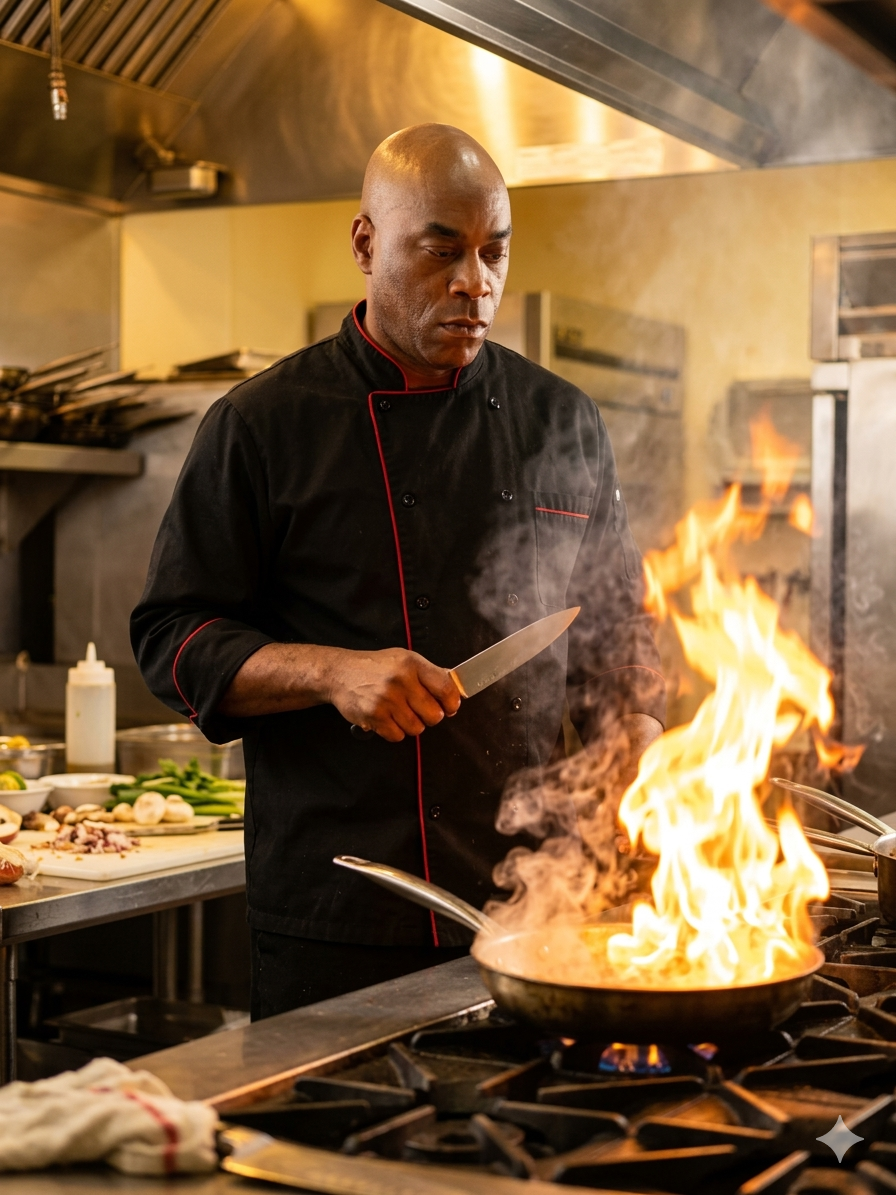
The ticket rail fills fast. Your ability to read and execute tickets determines everything.
Example Scenario
Two new cooks start in the same kitchen.
Cook A is technically decent, but they talk too much, laugh during intense prep, and do not notice when the room tightens before service. They ask broad questions while chef is busy. They become too familiar with people before earning it.
Cook B is equally skilled, but they watch first. They learn the tone. They speak with purpose. They ask better questions. They do not try to force their personality into the room on day one.
Cook B earns trust faster, even if both cooks can cut an onion the same way.
Why? Because kitchen culture is not just about skill. It is about fit, awareness, and discipline.
Rookie Mistakes
- Assuming 'being yourself' is always appropriate
- Becoming too familiar before earning it
- Joking at the wrong time
- Standing around waiting to be told everything
- Thinking friendliness equals acceptance
- Ignoring the emotional temperature of the room
The Professional Standard
Study the culture before trying to change it
Adapt first, judge later
Identify who gets respected and why
Earn trust through consistency, not personality
Avoid becoming friction
Chef Wisdom
"Kitchen culture is the invisible system running beneath the visible work. Learn it first, then contribute to it."
— 25 Years in Professional Kitchens
Workbook Reflection
Write your answers below. These are saved automatically in your browser.