
How Chefs Actually Evaluate Cooks: The Real Scorecard
Lesson Objective
By the end of this lesson, the student should understand the real criteria chefs use when deciding who is a liability, who is useful, and who is trusted — and how to move between those categories.
Why It Matters
Beginners often think chefs judge them mostly on taste or knife cuts. Chefs do judge those things. But in real kitchens, they judge something even bigger: Can this person be trusted in the system?
That is the real scorecard.
During rush, every decision compounds. Good habits save you; bad habits destroy you.
The Core Lesson
Chefs look at: punctuality, station condition, communication, attitude toward correction, recovery after mistakes, consistency, urgency, honesty, self-awareness, and reliability under pressure. These categories matter because they determine whether you help stabilize service or destabilize it.
Chefs are always sorting people into categories, even if they never say it out loud. Understanding which category you are in — and how to move up — is one of the most practical things a cook can learn.
Chefs remember repeated patterns more than isolated moments. They remember the cook who always runs out of something, the cook who never admits mistakes early, the cook who always needs to be reminded, the cook whose board stays messy, and the cook who becomes defensive. They also remember the cook who learns fast, the cook who resets the station, the cook who helps stabilize others, and the cook who becomes more solid every week.
The cook who tries to impress is often less impressive than the cook who simply becomes dependable. Dependability is rare. It is more valuable than talent in most kitchens.
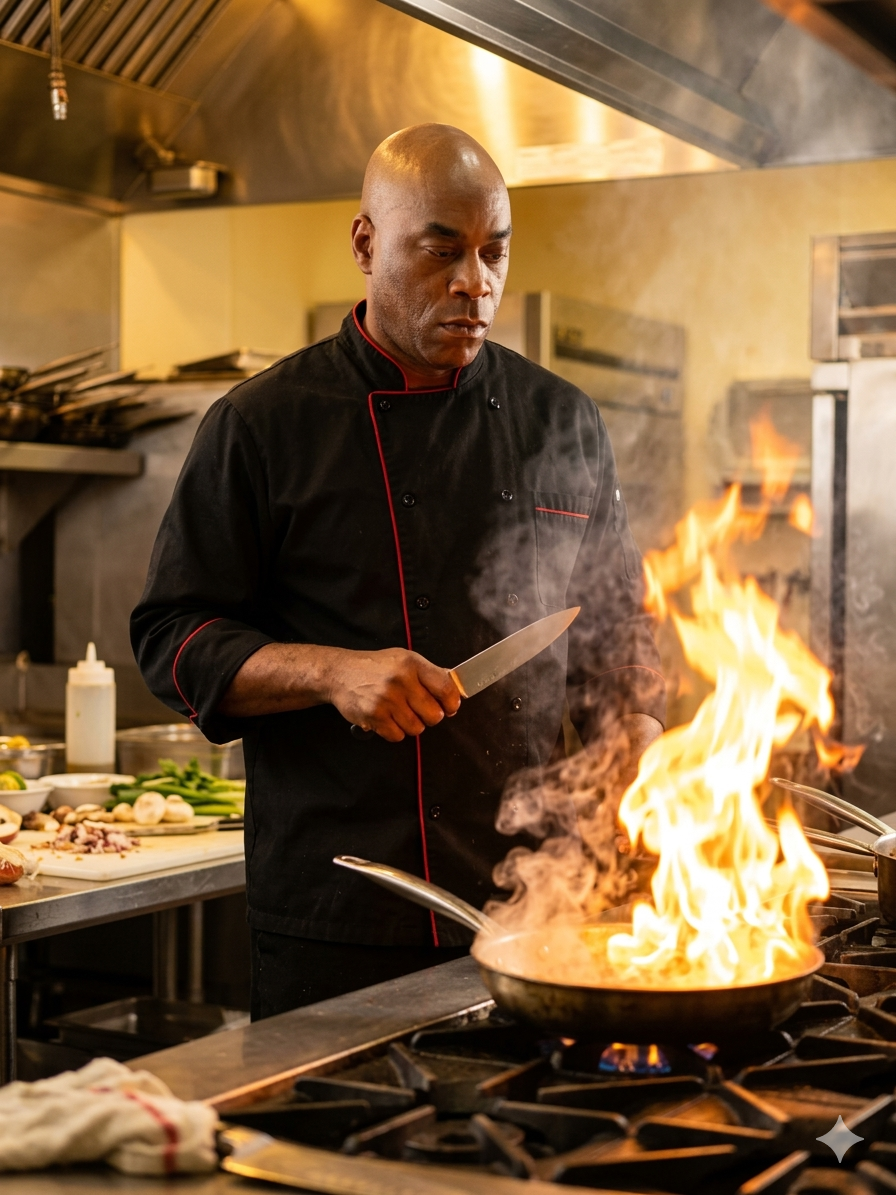
The expo station — where the kitchen and dining room meet.
The Chef Scorecard
Needs constant attention. Repeats mistakes. Creates friction. Hides problems. Disorganizes the station.
Can hold a station. Follows direction. Does not create unnecessary chaos. Still needs growth but is dependable.
Anticipates issues. Communicates early. Protects standards. Improves others. Makes the kitchen easier to run.
Which level are you at right now? Be honest.
Rookie Mistakes
- Trying to impress instead of becoming dependable
- Chasing praise instead of fixing habits
- Believing one great shift erases ten weak ones
- Hiding problems
- Performing confidence without substance
The Professional Standard
Become easy to trust
That is more powerful than trying to look impressive
Move from liability to useful by fixing repeated patterns
Move from useful to trusted by anticipating and protecting
Chef Wisdom
"Chefs promote the cook they don't have to babysit."
— 25 Years in Professional Kitchens
Workbook Reflection
Write your answers below. These are saved automatically in your browser.