Restaurant Pressure: Why People Break Down
Lesson Objective
By the end of this lesson, the student should understand what pressure does to cooks, why beginners often collapse under it, and how to build habits strong enough to function through it.
Why It Matters
Many people love food. Fewer people can handle pressure.
That is one reason restaurant turnover is so high.
This lesson matters because pressure changes behavior. If you do not understand what pressure does to cooks, you will not understand why so many beginners fail in ways that surprise them.
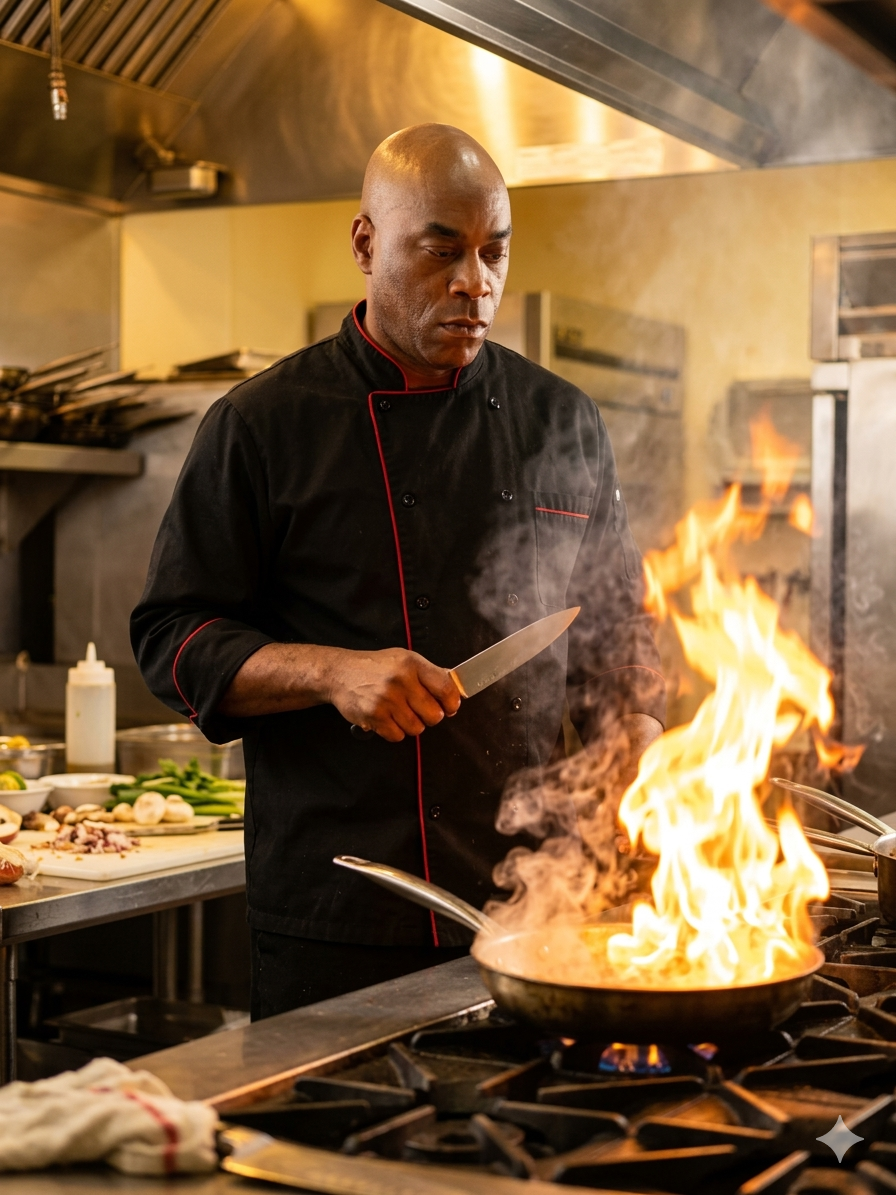
Kitchen hierarchy is real. Understanding it determines how fast you advance.
The Core Lesson
Pressure compresses time. It makes ten minutes feel like two. It makes one mistake feel bigger than it is. It makes noise feel louder. It narrows attention. It can make the body rush ahead of the mind. Under pressure, people often forget sequence, skip communication, tighten up physically, stop wiping down, stop listening fully, make impulsive decisions, and become emotionally reactive. This is normal. The problem is not feeling pressure. The problem is not having habits strong enough to function through it.
Restaurants combine several forms of pressure at once: time pressure, teamwork pressure, quality pressure, heat, noise, physical fatigue, and public consequences through guest experience. In many jobs, if you mess up, there is a long correction cycle. In a restaurant, the consequence may hit in minutes: dead food, bad pickup, angry server, chef correction, guest complaint, refire, lost product. That immediacy makes pressure feel sharper.
The dangerous beginner pattern: pressure rises, the beginner speeds up mentally, they stop sequencing, they stop communicating, they lose control of the board, they start making decisions from fear. This is how pressure turns into collapse.
The cure is not 'don't feel pressure.' The cure is habits. Pressure-resistant cooks keep stations cleaner, communicate earlier, fire with a sequence, check counts before panic, ask for help before disaster, and keep their face and hands under more control. In other words, they rely on trained behavior instead of feelings.
Pressure is not always a sign you are failing. Sometimes pressure just means: the kitchen is doing what kitchens do. The job is not to eliminate pressure. The job is to become operational inside it. That mental shift is huge.
Mentorship happens in real kitchens — watch, learn, and execute.
Example Scenario
Think about a time you were under pressure in any setting.
What happened to your attention? Your body? Your communication? Your decision-making?
Now write down what habit — if it had been stronger — would have helped you stay more functional.
In a kitchen, that habit is your protection. Not confidence. Not talent. The habit.
Rookie Mistakes
- Speeding up mentally instead of tightening the process
- Stopping communication when buried
- Letting one mistake spiral into five
- Making decisions from fear instead of sequence
- Abandoning clean habits the moment pressure rises
The Professional Standard
Communicate earlier, not later
Keep the station clean even when it's hard
Fire with a sequence, not a panic
Ask for help before disaster — not after
Rely on trained behavior, not feelings
Chef Wisdom
"Pressure exposes weak habits. The stronger your habits, the less pressure controls you."
— 25 Years in Professional Kitchens
Workbook Reflection
Write your answers below. These are saved automatically in your browser.