Advanced Plate Cost Calculation and Real Restaurant Profit Modeling
Lesson Objective
Master the complete plate cost calculation process — from raw ingredient purchase price through yield adjustment, portion cost, full plate cost, and menu pricing — so you can design dishes that are both culinarily excellent and financially sound.
Why It Matters
One of the most common mistakes young cooks make when they begin designing dishes is misunderstanding how expensive food really is to produce at scale.
At home, when a person cooks a meal, they may buy a few ingredients and estimate the cost casually. A restaurant cannot operate this way.
Restaurants must calculate food cost with precision, because even small inaccuracies multiply across hundreds or thousands of dishes served each week. A chef who designs a dish without properly calculating its cost may unknowingly introduce a menu item that slowly drains the profitability of the entire restaurant.
Learning to calculate plate cost correctly is one of the most important financial skills a chef can develop.
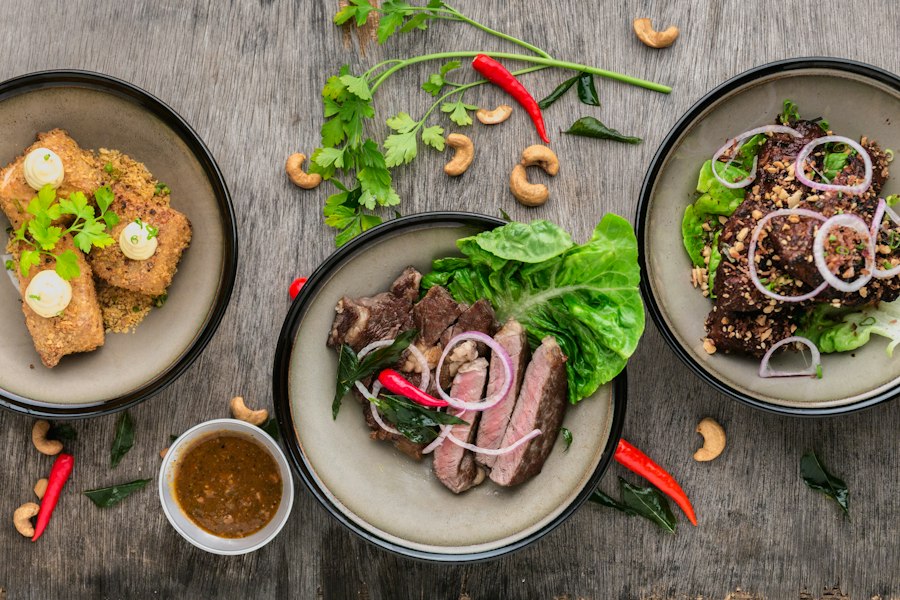
Restaurant economics: every dish has a cost, a price, and a margin.
The Core Lesson
When calculating plate cost, chefs must consider more than the purchase price of an ingredient. Every ingredient has three different values. Purchase cost is the price the restaurant pays to buy the product. Yield cost accounts for trimming, waste, and portions that cannot be used. Portion cost is the actual cost of the ingredient used in a single dish. Understanding all three is essential for accurate plate costing.
Consider a whole beef tenderloin as a teaching example. A restaurant may purchase a ten-pound tenderloin for $120. At first glance, this appears to cost $12 per pound. However, the entire ten pounds cannot be served as steaks. The chef must trim away fat, connective tissue, and unusable sections. After trimming, the usable yield may only be eight pounds. This means the true cost per usable pound is not $12 but $15. If the chef fails to account for yield loss, every steak served will cost more than expected. Professional kitchens calculate yield carefully to avoid this mistake.
Yield percentage measures how much usable product remains after trimming and preparation. The formula: usable weight divided by original weight, multiplied by 100. For the tenderloin example: 8 pounds usable ÷ 10 pounds original × 100 = 80% yield. If the restaurant paid $120 for the original cut, the true cost per pound of usable meat becomes: $120 ÷ 8 pounds = $15 per pound. Once the yield-adjusted cost is known, portion cost calculation follows. For an eight-ounce tenderloin: $15 per pound ÷ 16 ounces = $0.94 per ounce × 8 ounces = $7.52 per portion.
Building the full plate cost requires calculating every component. For a tenderloin dish with roasted fingerling potatoes ($1.10), sautéed mushrooms ($1.40), herb butter ($0.75), red wine reduction ($1.00), and microgreens garnish ($0.60): total plate cost = $7.52 + $1.10 + $1.40 + $0.75 + $1.00 + $0.60 = $12.37. This number represents the total ingredient cost for producing one plate. To determine menu price at a 30% food cost target: $12.37 ÷ 0.30 = $41.23. If the restaurant prices the dish at $30 instead, food cost jumps to over 41%, significantly reducing profit.
Even careful chefs sometimes forget additional costs associated with each dish. Hidden costs may include bread service, sauces served on the side, complimentary garnishes, oil used in cooking, plating components, and seasoning and finishing ingredients. Although these items appear small, they accumulate significant cost when multiplied across hundreds of plates. If a garnish costs only $0.40 but the restaurant serves 400 dishes per night, the garnish alone costs $160 per evening — several thousand dollars per month. Accurate plate costing ensures these expenses are accounted for properly.
Food cost control is the difference between a profitable restaurant and a closed one.
Example Scenario
A chef designs a new salmon dish and estimates the plate cost at $11. The restaurant prices it at $36 — a 30.5% food cost. The dish becomes popular.
Six months later, the chef does a proper yield analysis. The salmon yield is 72%, not the 85% estimated. The actual protein cost is $3.50 higher than calculated. True plate cost: $14.50. True food cost at $36: 40.3%.
The popular dish has been running at 10 points above target food cost for six months. On 150 covers per week, the miscalculation cost $19,500 in excess food cost.
Rookie Mistakes
- Using purchase price instead of yield-adjusted cost for plate costing
- Forgetting hidden costs — garnishes, finishing oils, bread service, plating components
- Not recalculating plate cost when ingredient prices change
- Designing dishes without calculating their financial viability
- Confusing food cost percentage with profit margin — they are different calculations
The Professional Standard
Three ingredient values: purchase cost, yield cost, portion cost — always calculate all three
Yield percentage = usable weight ÷ original weight × 100
True cost per pound = purchase price ÷ usable yield weight
Menu price = plate cost ÷ target food cost percentage
Hidden costs are real costs — account for every component, including finishing ingredients
Chef Wisdom
"Cooking skill creates great dishes, but economic understanding determines whether those dishes can exist on a restaurant menu. A chef who ignores this balance may create impressive food but struggle to run a sustainable kitchen. A chef who masters both sides becomes capable of building restaurants that succeed long term."
— 25 Years in Professional Kitchens
Workbook Reflection
Write your answers below. These are saved automatically in your browser.
Extended Study
The mathematics of plate costing reveal a critical insight about restaurant economics: small errors compound dramatically at scale. A $1 miscalculation per dish across 200 weekly covers costs $200 per week, $800 per month, and $9,600 per year. A $2 miscalculation doubles that to $19,200 annually.
This is why professional kitchens use standardized recipe costing software — tools like ChefTec, CostGuard, or Restaurant365 — to calculate and track plate costs systematically. These tools allow chefs to update ingredient costs when prices change and immediately see the impact on every affected menu item.
The concept of menu engineering, developed by Michael Kasavana and Donald Smith at Michigan State University in 1982, provides a framework for analyzing the entire menu through the lens of both popularity and profitability. Items are classified as Stars (high popularity, high profit), Plowhorses (high popularity, low profit), Puzzles (low popularity, high profit), and Dogs (low popularity, low profit). This framework guides menu design, pricing strategy, and promotional decisions.
Kitchen Simulation
Design a complete plate cost analysis for a dish you know well. List every ingredient with its purchase price, yield percentage, and portion cost. Calculate the total plate cost. Then determine the menu price at both 28% and 32% food cost targets. Finally, identify two hidden costs you might have forgotten in a first pass and add them to the calculation. What is the final menu price range?
Mastery Questions
Can you answer these without looking back? These are the questions your certification exam will draw from.
- 1What are the three values of every ingredient in plate costing — and why is yield cost the most commonly miscalculated?
- 2A restaurant purchases a 12-pound salmon for $96. After butchering, the usable yield is 9 pounds. What is the yield percentage and the true cost per pound of usable salmon?
- 3A dish has a plate cost of $14.50. What should the menu price be at a 30% food cost target? At a 25% target?
- 4What are the four categories in menu engineering — and what strategic action is appropriate for each?
- 5Why do hidden costs matter — and what is the annual impact of a $0.50 hidden cost on a dish served 300 times per week?
Take It to the Kitchen
Choose a dish from your current kitchen menu and build a complete plate cost analysis from scratch. Calculate yield percentages for all proteins, portion costs for all components, and total plate cost. Compare your calculated plate cost to the actual menu price and determine the implied food cost percentage. Write your findings.
YouTube: 'Plate Costing — The Math That Determines Whether Your Menu Is Profitable' | Textbook Chapter: Plate Cost Calculation and Menu Pricing Architecture | Certification Module: Plate Cost Calculation Assessment | Simulation: Full menu costing exercise | Case Study: How a plate cost audit revealed a $45,000 annual pricing error