
How Restaurants Actually Make Money
Lesson Objective
Understand the complete financial architecture of a restaurant — how revenue is generated, how costs are structured, and why the margin between revenue and cost is so thin that every kitchen decision has financial consequences.
Why It Matters
Most cooks think about food. Chefs think about food and money simultaneously.
This is not because chefs are less passionate about cooking. It is because chefs understand that the ability to cook professionally depends on the financial health of the restaurant. A restaurant that loses money closes. When it closes, the kitchen goes with it.
Understanding how restaurants make money is not optional knowledge for anyone who wants to build a career in professional kitchens. It is foundational.
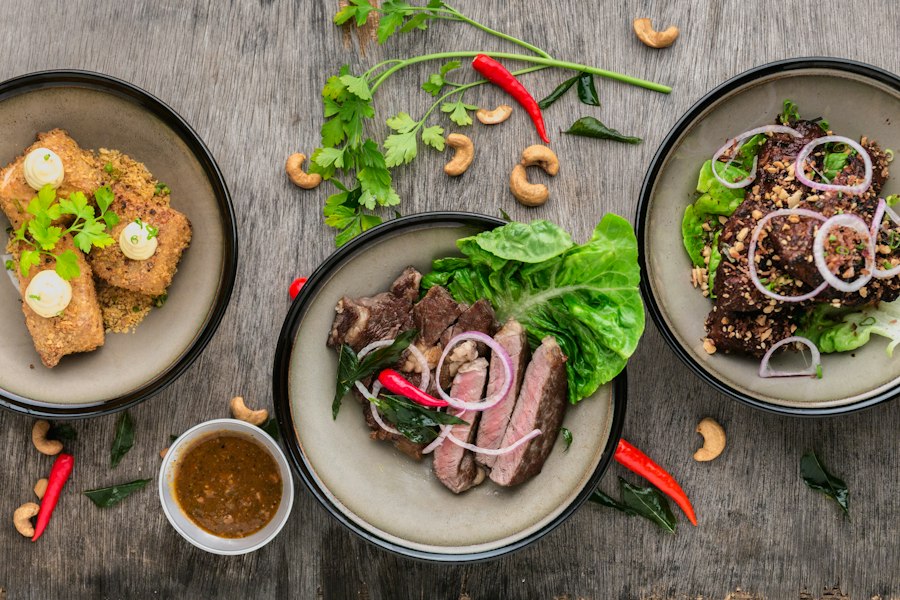
Restaurant economics: every dish has a cost, a price, and a margin.
The Core Lesson
A restaurant generates revenue through one primary mechanism: selling food and beverages to guests. This sounds simple, but the financial structure underneath it is complex. Revenue is not profit. Revenue is the total amount of money that comes in. Profit is what remains after all costs are paid. In most restaurants, the gap between revenue and profit is surprisingly small.
The average restaurant operates on a profit margin of 3 to 9 percent of revenue. This means that for every $100 a restaurant brings in, it keeps between $3 and $9 after all expenses. To put this in perspective: if a restaurant does $1 million in annual revenue, it may generate only $30,000 to $90,000 in profit. This is why restaurants are financially fragile — a small increase in costs or a small decrease in revenue can eliminate profit entirely.
The three primary cost categories in a restaurant are food cost, labor cost, and overhead. Food cost is the cost of the ingredients used to produce the food sold. In most restaurants, food cost runs between 28 and 35 percent of food revenue. Labor cost includes all wages, salaries, benefits, and payroll taxes for kitchen and front-of-house staff — typically 30 to 35 percent of revenue. Overhead includes rent, utilities, insurance, equipment maintenance, and other fixed costs — typically 15 to 20 percent of revenue. When these three categories are added together, they consume 75 to 90 percent of revenue, leaving the 3 to 9 percent margin for profit.
The concept of prime cost is one of the most important financial metrics in restaurant management. Prime cost is the combined total of food cost and labor cost — the two largest and most controllable expenses. A restaurant that keeps prime cost below 65 percent of revenue is generally in a healthy financial position. A restaurant where prime cost exceeds 70 percent is in danger. Kitchen professionals who understand prime cost understand why both food waste and labor inefficiency are financially serious problems.
Revenue in restaurants is not uniform. Different days, different dayparts, and different menu items generate different amounts of revenue and different profit margins. A Friday dinner service may generate five times the revenue of a Tuesday lunch. A pasta dish may have a 75 percent gross margin while a premium steak has a 45 percent gross margin. Understanding these patterns allows kitchen leaders to make decisions that optimize financial performance — not just culinary quality.

Food cost control is the difference between a profitable restaurant and a closed one.
Example Scenario
A restaurant does $50,000 in weekly revenue. Food cost is $17,000 (34%). Labor cost is $17,500 (35%). Overhead is $9,000 (18%). Total costs: $43,500. Profit: $6,500 (13%) — a good week.
The next week, a supplier price increase raises food cost by $1,500. A call-out forces overtime, raising labor by $800. Total costs: $45,800. Profit: $4,200 (8.4%).
Two cost increases, neither dramatic, reduced profit by 35%. This is why thin margins make every kitchen decision financially significant.
Rookie Mistakes
- Thinking financial performance is someone else's responsibility
- Not understanding that revenue and profit are completely different numbers
- Ignoring the cumulative financial impact of small daily decisions
- Not connecting kitchen efficiency to labor cost
- Thinking food waste is only a food quality issue — it is primarily a financial issue
The Professional Standard
Restaurant profit margins are thin: 3-9% — every kitchen decision has financial consequences
Three primary costs: food (28-35%), labor (30-35%), overhead (15-20%)
Prime cost = food + labor — keep it below 65% for financial health
Different menu items have different margins — understand which items drive profitability
Kitchen skill and financial performance are the same domain, not separate ones
Chef Wisdom
"The cook who understands the business of the kitchen is worth more than the cook who only understands the food. The best chefs are both — and they build their careers on both foundations."
— 25 Years in Professional Kitchens
Workbook Reflection
Write your answers below. These are saved automatically in your browser.
Extended Study
The economics of the restaurant industry are uniquely challenging compared to most other businesses. The National Restaurant Association reports that the restaurant industry employs approximately 15 million people in the United States and generates over $900 billion in annual revenue — yet the failure rate remains among the highest of any industry sector.
The primary financial challenge is the combination of high fixed costs (rent, equipment, insurance), high variable costs (food, labor), and low average transaction values. Unlike a software company that can scale revenue without proportionally scaling costs, a restaurant must add proportional labor and food cost for every additional dollar of revenue it generates. This structural reality means that operational efficiency — doing more with the same resources — is the primary driver of restaurant profitability.
For kitchen professionals, this means that every improvement in efficiency, every reduction in waste, and every improvement in labor productivity directly improves the financial health of the business. Kitchen skill and financial performance are not separate domains — they are the same domain.
Kitchen Simulation
A restaurant does $800,000 in annual food revenue. Food cost is running at 34%. Target food cost is 29%. Calculate: how much money is being lost annually to the food cost gap? If the kitchen reduced waste by 2%, improved portion accuracy by 1%, and improved purchasing efficiency by 2%, would that close the gap? What is the annual dollar value of closing the gap?
Mastery Questions
Can you answer these without looking back? These are the questions your certification exam will draw from.
- 1What is the average restaurant profit margin, and what does it mean in dollar terms for a restaurant doing $1M in annual revenue?
- 2What are the three primary cost categories in a restaurant, and what are the typical percentage ranges for each?
- 3What is prime cost, and what percentage threshold separates a financially healthy restaurant from a financially stressed one?
- 4Why do different menu items have different profit margins — and why does this matter for kitchen decision-making?
- 5What is the structural reason why restaurant profitability is so sensitive to small changes in food cost and labor cost?
Take It to the Kitchen
Research the financial performance of one restaurant concept you are familiar with. Estimate its annual revenue, food cost percentage, labor cost percentage, and overhead. Calculate its estimated prime cost and profit margin. Write your analysis and identify the two biggest financial risks for that concept.
YouTube: 'Restaurant Economics 101 — What Every Cook Needs to Know' | Textbook Chapter: The Financial Architecture of the Professional Kitchen | Certification Module: Restaurant Economics Assessment | Simulation: Prime cost calculation exercise | Case Study: How a 3-point food cost improvement saved a restaurant from closure