
Professional Attitude: The Difference Between Being Coachable and Being Exhausting
Lesson Objective
Understand what professional attitude actually means in a kitchen — coachable, steady, accountable, solution-oriented, and not emotionally expensive — and build the self-awareness to manage emotional responses professionally.
Why It Matters
Attitude in kitchens is often misunderstood.
Many people think 'good attitude' means cheerful, agreeable, or quiet. That is not enough.
Professional attitude means coachable, steady, accountable, solution-oriented, and not emotionally expensive. That last phrase matters most.
Professional discipline: the habits that separate cooks who last from cooks who don't.
The Core Lesson
Some cooks are skilled but emotionally expensive. They need too much reassurance, too much correction, too much mood management, too much energy from the room. That weakens the team. A kitchen is a high-pressure environment — every person in it is managing their own stress. A cook who adds emotional weight to the room is a cook who makes everyone else's job harder. That is the real cost of poor attitude.
A professional attitude includes: willingness to learn, ability to hear correction without collapse, honesty when something goes wrong, effort without drama, humility without passivity, self-control under frustration, and respect for standards even when tired. It does not mean never having emotion, pretending everything is fine, or being fake-positive. It means your emotional life does not constantly spill into the kitchen as a work problem.
The fastest ways to look unprofessional: eye-rolling, excuse-making, visible sulking after correction, blame shifting, passive-aggressive behavior, acting above prep or dish or cleanup, and becoming fragile when standards are enforced. These habits create a reputation faster than many beginners realize. A cook who eye-rolls correction will be trusted with less. A cook who makes excuses will be given fewer opportunities. Reputation in a kitchen is built quickly and changed slowly.
Technical skill can often be improved. Bad attitude slows improvement itself. A coachable cook can grow. A resistant cook traps themselves. The cook who cannot hear correction cannot learn from it — and the cook who cannot learn from correction will repeat the same mistakes until they are no longer given the chance to correct them.
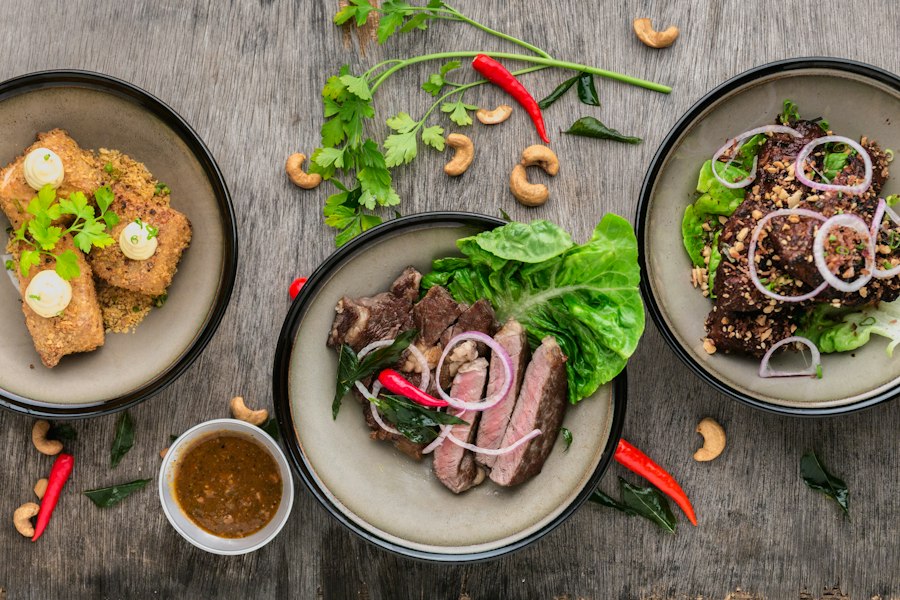
Discipline is not about rules. It's about standards you hold yourself to.
Example Scenario
Write down: - What correction usually makes you defensive - What your first emotional reaction tends to be - What a professional response would look like instead
This is how emotional maturity becomes trainable — not by suppressing emotion, but by building a better response between the emotion and the action.
Rookie Mistakes
- Thinking 'good attitude' means being cheerful or agreeable
- Becoming emotionally expensive — needing too much reassurance or mood management
- Eye-rolling, sulking, or making excuses after correction
- Acting above prep, dish, or cleanup
- Letting emotion decide the quality of work
The Professional Standard
Coachable, steady, accountable, solution-oriented, not emotionally expensive
Hear correction without collapse — separate tone from information
Effort without drama — the work speaks for itself
Self-control under frustration — emotion does not decide quality
Your emotional life does not become the kitchen's extra workload
Chef Wisdom
"Professional attitude is not about being pleasant all the time. It is about being coachable, accountable, and not making your emotions the kitchen's extra workload. The cook who can hear correction and adjust is the cook who keeps getting better."
— 25 Years in Professional Kitchens
Workbook Reflection
Write your answers below. These are saved automatically in your browser.
Extended Study
The concept of emotional labor in professional kitchens has been studied extensively in organizational psychology. Kitchens are high-emotional-labor environments: the work requires sustained performance under conditions that naturally generate frustration, anxiety, and fatigue. The question is not whether these emotions arise — they will. The question is what happens to them when they do.
The Emotional Contagion Effect: Research in social psychology shows that emotions are contagious in close-proximity work environments. When one person in a kitchen becomes visibly frustrated, anxious, or negative, it affects the emotional state of the people around them. This is not metaphorical — it is neurological. Mirror neurons cause humans to unconsciously mirror the emotional states of people in their environment. A cook who broadcasts negative emotion is not just affecting their own performance. They are degrading the emotional environment for the entire team.
The Coachability Paradox: The cooks who most need correction are often the least able to receive it. This is because the same insecurity that causes performance errors also causes defensive responses to feedback. The cook who is afraid of being seen as incompetent will make errors out of anxiety, then defend against correction to protect their self-image — creating a cycle where the errors continue and the opportunities for correction are wasted. Breaking this cycle requires building a different relationship with correction: not as a threat to self-worth, but as information about performance.
The Response Gap: Between a stimulus (correction) and a response (defensive reaction), there is a gap. In an untrained person, this gap is nearly zero — the reaction is automatic. In a trained professional, this gap can be expanded through deliberate practice. The skill of professional attitude is largely the skill of expanding this gap: creating enough space between the correction and the response to choose a professional reaction rather than an automatic defensive one.
Kitchen Simulation
Scenario A — The Public Correction: Chef corrects your knife work in front of three other cooks. The correction is accurate but the tone is sharp. The Survival Move: 'Yes, Chef.' Adjust immediately. Do not explain. Do not defend. Do not make eye contact with the other cooks in a way that signals resentment. The correction was about the knife work, not about you. Separate the information from the tone. The information is: your knife work needs to change. Act on the information. Scenario B — The Unfair Correction: You are corrected for something that was not your fault. The timing was off because the previous station sent you late product. The Survival Move: 'Yes, Chef. I'll make sure it doesn't happen again.' After service, if it is appropriate, explain the context calmly and factually: 'Chef, I wanted to let you know that the timing issue on table 14 was because I received the protein late from sauté. I'll communicate earlier next time.' This is not excuse-making — it is information. The difference is timing and tone. Scenario C — The Mood Spiral: It is hour six of a ten-hour shift. You are tired, frustrated, and a refire just happened on your station. You can feel your attitude degrading. The Survival Move: Recognize the spiral before it becomes visible. Take three slow breaths. Reset your station. Focus on the next ticket only. Your mood is your responsibility — not the kitchen's. A cook who can self-regulate in hour six is a cook who can be trusted in hour ten.
Mastery Quiz
Test yourself before revealing answers. These questions come directly from your certification exam.
Take It to the Kitchen
Write down: what correction usually makes you defensive, what your first emotional reaction tends to be, and what a professional response would look like instead. For the next two weeks, practice the professional response whenever you receive correction. Note how your relationship with feedback changes over time.
Module 7, Lesson 68: Handling Criticism Without Getting Weaker — the specific skill of receiving performance correctionModule 8, Lesson 74: Learning from Mistakes — how professional attitude enables the performance-learning cycleModule 9, Lesson 82: Working with Difficult Chefs — how professional attitude protects you in politically complex environments