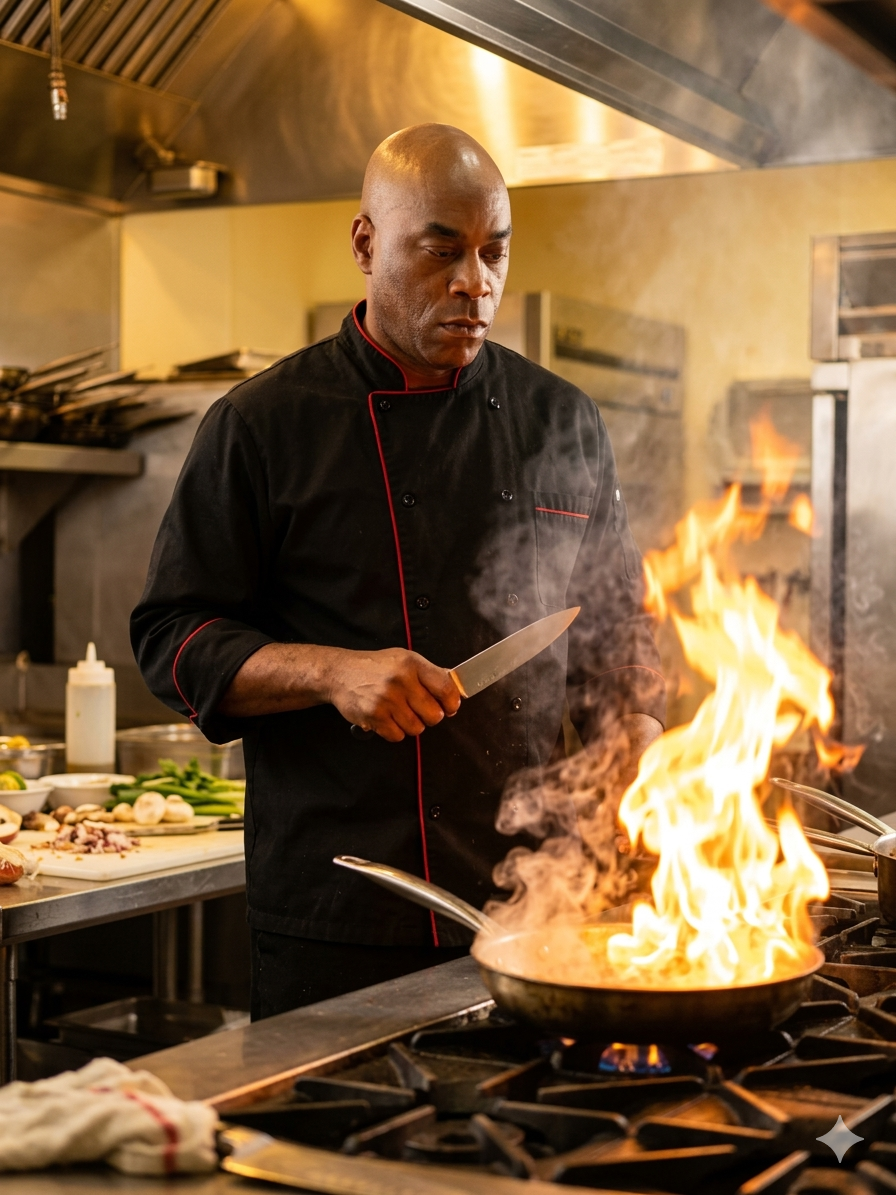
The First Week Strategy
Lesson Objective
Have a clear day-by-day strategy for the first week in a kitchen — so learning happens in the right order instead of reacting emotionally to whatever comes.
Why It Matters
Your first week should not feel random. You need a strategy.
If you do not have one, you will spend the week reacting emotionally to whatever happens. That slows learning and creates avoidable mistakes.

Mistakes happen. The professional response is immediate acknowledgment and correction.
The Core Lesson
The first week is for mapping the kitchen, learning the people, understanding the rhythm, studying the standards, reducing your friction, and building repeatable habits. It is not for showing off. It is not for acting like you already know everything. It is not for forcing speed before control exists.
Most beginners try to skip stages. They want to be fast before organized, look confident before understanding, and sound experienced before being dependable. That creates a weak foundation. The sequence matters because it builds the foundation in the right order.
Each day builds on the last. You cannot learn station flow on Day 1 if you don't know the layout. You cannot build speed on Day 3 if you haven't learned the rhythm. The order is the strategy.
Learn from every mistake. The kitchen is a classroom that never closes.
The Three Chef Types
Layout. Who's who. Station observation. Tone of the room. Your only job is to map and watch.
Tool locations. Prep rhythm. Traffic flow. Kitchen language. Start moving with more purpose.
Station setup logic. Key menu items. Backup structure. You should be able to set the station without being told every step.
Speed with cleanliness. Responding to correction faster. Repeating fewer mistakes. The foundation is set — now build on it.
Becoming more useful. Asking better questions. Improving consistency. This is where trust starts building.
Example Scenario
Write your own first-week checklist with these sections: layout, people, language, station, standards, questions to ask, mistakes to avoid.
This becomes your beginner operating plan — not a vague intention, but a real strategy you can execute shift by shift.
Rookie Mistakes
- Trying to skip stages — fast before organized, confident before understanding
- Spending Day 1 trying to impress instead of observe
- Not having a plan and reacting emotionally to each shift
- Treating every day the same instead of building in sequence
The Professional Standard
Map before you move — layout first, speed later
Build the foundation in the right order
Have a daily focus — not just 'do my best'
Track your own friction reduction week over week
Chef Wisdom
"The first week should be intentional. A beginner who studies the right things early becomes useful much faster than one who just shows up and reacts."
— 25 Years in Professional Kitchens
Workbook Reflection
Write your answers below. These are saved automatically in your browser.