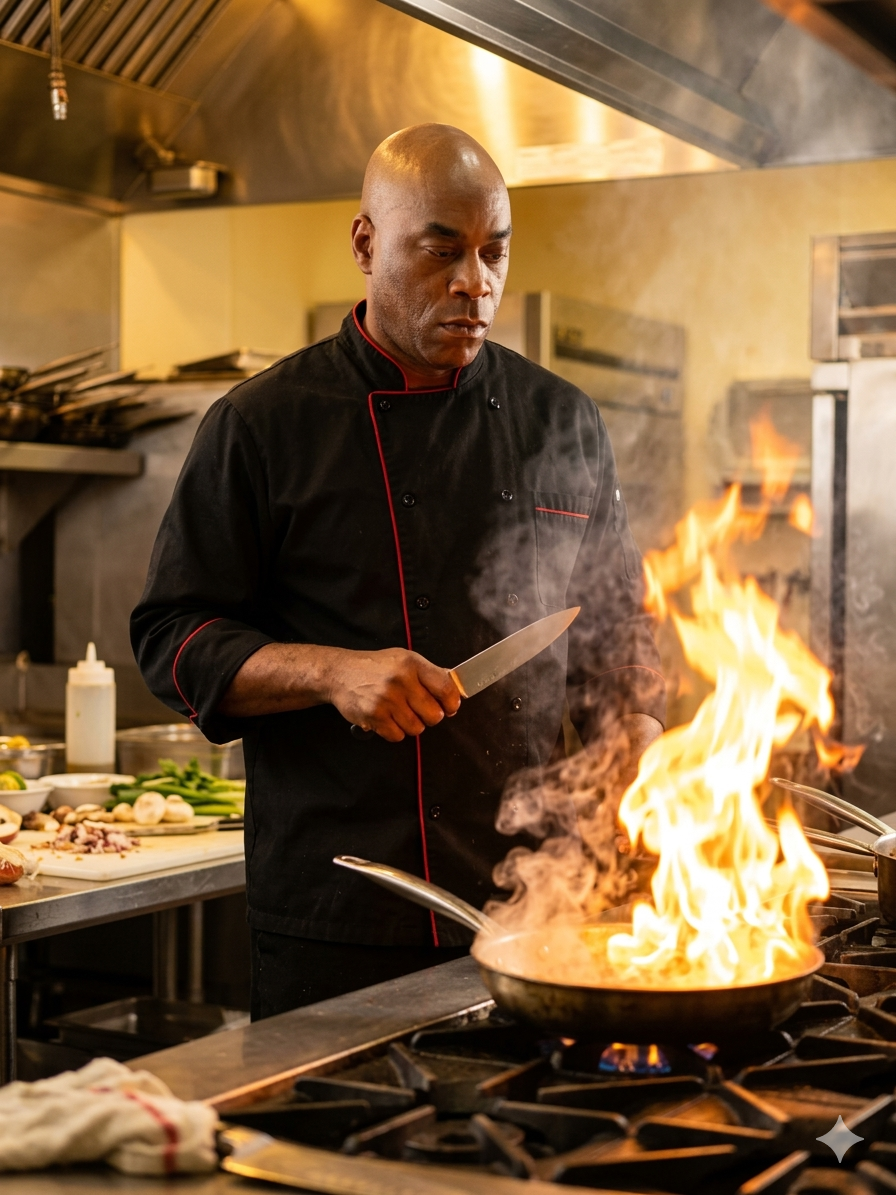
Mistakes New Cooks Always Make
Lesson Objective
Identify the ten most common beginner mistakes, understand what causes each one, and know what professional habit replaces it.
Why It Matters
Every new cook makes mistakes. That is not the issue.
The issue is whether you recognize them, admit them, learn from them, and stop repeating them.
This lesson exists because many beginner mistakes are predictable. If you can see them early, you can avoid wasting months learning the hard way.
After 30 days, the kitchen has formed its opinion of you. Make sure it's the right one.
The Core Lesson
The ten most common beginner mistakes are not random. They follow patterns. And for each one, the correction is a stronger habit — not a lecture, not a personality change, but a specific behavior that replaces the weak one.
Confusion becomes better observation. Silence becomes earlier communication. Repeated errors become note-taking and review. Mess becomes reset habits. Ego becomes humility and focus. This is why kitchens are habit-driven environments. The fix is almost always a habit, not a mindset speech.
The goal is not to be mistake-free. The goal is to become the kind of cook who learns quickly enough that mistakes stop repeating. That is the real standard in a first kitchen.
Consistency over 30 days builds trust. Trust builds opportunity.
The Three Chef Types
Rushing to appear useful creates sloppy work. Speed without control is worse than slow with control.
Waiting until disaster is obvious before communicating. The kitchen needed that information 10 minutes ago.
The kitchen can forgive inexperience faster than repeated carelessness. Once is learning. Twice is a pattern.
Slows learning and creates emotional friction. Chef is correcting the behavior, not attacking the person.
Mess becomes confusion, and confusion becomes slower service. A messy station is a slow station.
Fake confidence is dangerous in kitchens. If you don't know, say so — then fix it.
Memory under pressure is weaker than people think. A notebook is not weakness — it is a system.
Comfort before contribution creates bad optics. Earn the room before you relax in it.
This signals weak professionalism. These are not low-status tasks — they are the foundation of service.
Talent without discipline is unstable in service. The kitchen needs reliability, not occasional brilliance.
Example Scenario
Choose the three beginner mistakes you are most likely to make.
For each one, write: what it looks like in a real kitchen, what causes it in you specifically, and what professional habit replaces it.
That turns this lesson into a personal growth plan.
Rookie Mistakes
- Recognizing mistakes in others but not in yourself
- Knowing the list but not applying it to your own behavior
- Treating this as a checklist to memorize instead of a mirror to look into
The Professional Standard
Self-correct before chef has to correct you
Write down your three most likely mistakes and build habits against them
The goal is not zero mistakes — it is faster learning and fewer repeats
Chef Wisdom
"The goal is not to be mistake-free. The goal is to become the kind of cook who learns quickly enough that mistakes stop repeating."
— 25 Years in Professional Kitchens
Workbook Reflection
Write your answers below. These are saved automatically in your browser.
Module 02 Complete
Module 2 teaches that survival in a first kitchen is not about talent — it is about strategy, awareness, and building the right habits from day one. By the end of this module, the student should know how to prepare before a shift, make a strong first impression, learn the layout fast, find things without looking lost, understand their station as a system, use kitchen etiquette correctly, work with dish professionally, build trust with chef through repeated proof, execute a day-by-day first week strategy, and recognize and correct the ten most common beginner mistakes.