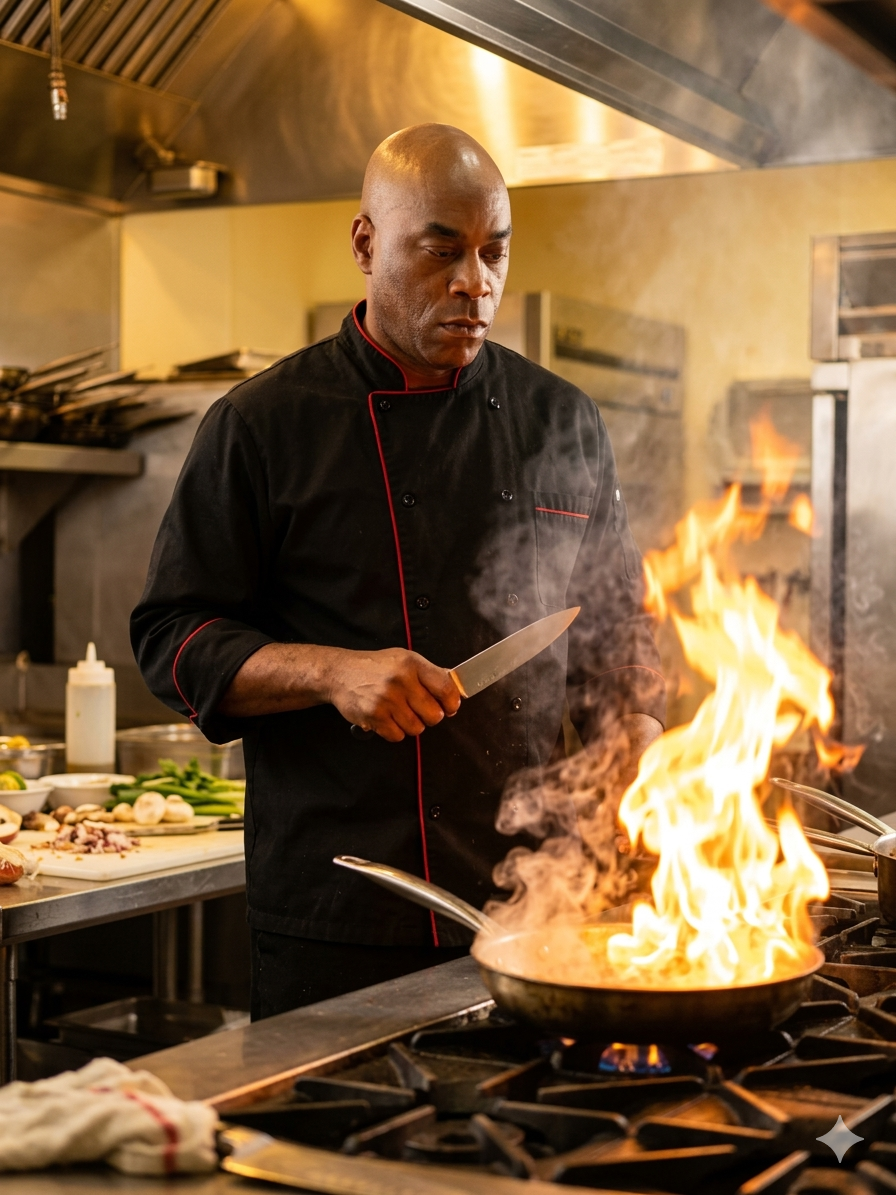
Working Ahead (Dropping Ahead) the Right Way
Lesson Objective
Learn when and how to work ahead intelligently — using real pattern recognition instead of anxiety — and understand the difference between smart anticipation and dangerous guessing.
Why It Matters
Working ahead is one of the most valuable service instincts in a real kitchen.
It is also one of the easiest to misuse.
Done well, it creates speed. Done badly, it creates waste, dead food, and false confidence.
Quality control is everyone's responsibility. Send nothing out that you wouldn't eat yourself.
The Core Lesson
Working ahead means anticipating likely demand and beginning certain actions before the next ticket forces the action. This is most common with fries, burger patties, common proteins, common sides, breading replenishment, backup pans, garnishes, and sauces. The purpose is to stay ahead of the wave without overcommitting blindly.
Service punishes pure reaction. If you wait until every ticket fully arrives before thinking, high-volume stations often fall behind. Working ahead gives the station breathing room. But this only works if the cook understands volume patterns and risk. The core principle: never drop ahead blindly. Working ahead should come from rail reading, pattern recognition, station experience, communication, and realistic volume awareness — not from anxiety.
An anxious cook often overfires. A smart cook preps the future carefully. Good ahead work reflects real volume patterns, protects station rhythm, reduces future delay, and keeps quality intact. Bad ahead work guesses wildly, produces dead food, creates unnecessary waste, clutters the station, and makes the cook think they are ahead when they are actually less flexible.
The final check: temperature, presentation, accuracy. Every plate, every time.
Example Scenario
The rail shows repeated burgers and fries. Dropping one extra basket at the right moment may stabilize the station.
If the room suddenly slows and you dropped three baskets with no real need, you created waste.
The difference is judgment — not effort.
Imagine the rail shows: 5 burgers, 4 fries, 2 chicken sandwiches in quick succession. What can reasonably be worked ahead? What should not be overcommitted? What risks come from dropping too aggressively?
Rookie Mistakes
- Dropping ahead from anxiety instead of pattern recognition
- Overfiring and creating waste when volume drops
- Thinking 'working ahead' means 'fire everything early'
- Not adjusting ahead work when the rail changes
The Professional Standard
Work ahead from rail reading and pattern recognition — not anxiety
Never drop ahead blindly
Adjust ahead work as the rail changes
Anticipation is powerful. Guessing is dangerous.
Chef Wisdom
"Working ahead is one of the marks of a strong cook — but only when it is tied to real pattern recognition. Anticipation is powerful. Guessing is dangerous."
— 25 Years in Professional Kitchens
Workbook Reflection
Write your answers below. These are saved automatically in your browser.