Thinking Ahead: The Discipline of Seeing the Next Problem Before It Arrives
Lesson Objective
Develop the habit of thinking ahead — identifying likely demand, shortages, timing conflicts, and pressure points before they force themselves into the room. Shift from reactive to predictive kitchen thinking.
Why It Matters
The first major shift from cook thinking to chef thinking is this:
Stop asking only, 'What am I doing now?' Start asking, 'What is about to become a problem if I do nothing?'
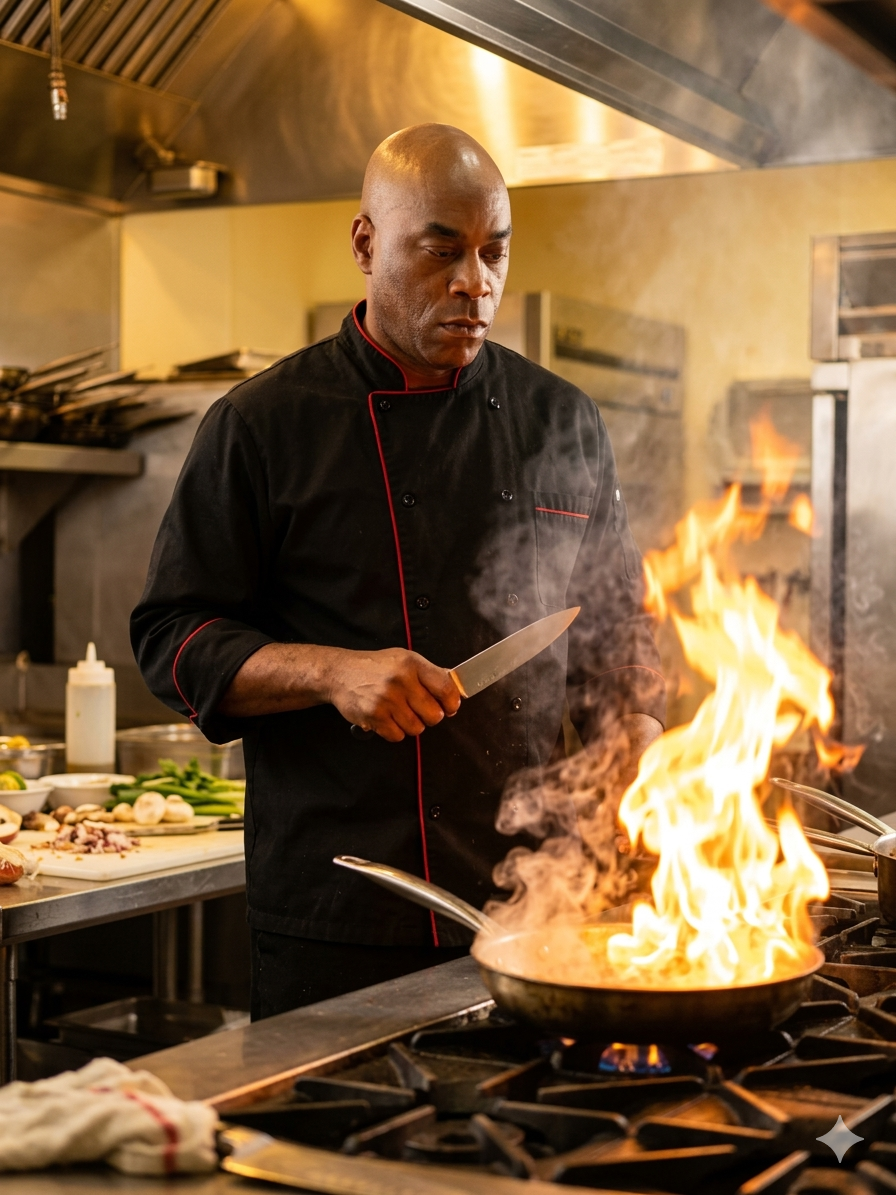
That is thinking ahead. Most weak kitchen behavior is reactive. The cook sees the station run out, then scrambles. They see the rail stack, then panic. Strong cooks and chefs think ahead — not because they are psychic, but because they are pattern readers.
Becoming valuable means thinking beyond your station.
The Core Lesson
Thinking ahead is the habit of identifying likely demand, likely shortages, likely timing conflicts, likely pressure points, and likely recovery needs before those things force themselves into the room. This matters because kitchens punish late awareness. The earlier a problem is recognized, the cheaper it usually is. The later it is recognized, the more disruptive it becomes. A problem caught at the two-minute mark is a communication. A problem caught at the zero-minute mark is a crisis.
Reactive work feels urgent and concrete — you can see a pan is empty, you can see fries are gone, you can see the ticket rail now. But foresight requires abstraction: prediction, pattern recognition, memory, and judgment. Beginners are often too overloaded just trying to survive the present to think well about the near future. That is normal. But it must be developed. The cook who can think three minutes ahead while executing the present moment is the cook who never looks desperate.
Thinking ahead is not guessing. It is based on current evidence, recent pattern, known station weakness, menu behavior, shift rhythm, and experience. Good foresight is informed. Bad foresight is anxiety pretending to be wisdom. 'Let me drop 6 extra things because I'm scared' is not strong anticipation. Strong anticipation sounds like: 'The rail pattern plus current counts suggest I need one additional backup and a timing adjustment now.' That is disciplined foresight — specific, evidence-based, and actionable.
During service, a cook learning to think ahead should repeatedly ask: What am I going to need in three minutes? What station weakness is forming right now? What on the rail is repeating? What would hurt most if I ignored it for five more minutes? What is fine now, but fragile? That last question is one of the best chef-thinking questions in the kitchen. 'Fine now, but fragile' is the space where most service problems are born — and where foresight lives.
The most valuable cook in any kitchen is the one who makes everyone else better.
The Three Chef Types
What am I likely to run low on soon? Track counts, monitor backup levels, and anticipate demand based on current rail patterns. Act before the shortage becomes visible.
What item or pickup is about to control the pace of this rail? Identify the controlling item before it becomes a bottleneck. Adjust firing sequence proactively.
Who around me looks like they may need help soon? Read body language, station organization, and communication patterns. Offer support before the collapse becomes visible.
What on my station is not truly ready, even if it looks okay? Identify fragile setups, low backups, and weak points before service pressure exposes them.
What pattern is the dining room about to create in the next 5–10 minutes? Read table turns, reservation patterns, and ticket flow to anticipate volume shifts before they hit the rail.
Example Scenario
A strong fry cook notices: the rail has been burger-heavy for 8 minutes, side fries are repeating, backup fries are below comfort threshold, and one more wave will create a shortage problem. So they act before the station becomes visibly desperate.
A reactive fry cook waits until the current pan is nearly empty, then starts moving late.
The visible difference is timing. The deeper difference is thinking. The strong cook was reading the pattern while executing — the reactive cook was only executing.
Rookie Mistakes
- Waiting until the problem is visible before acting — by then it is already expensive
- Confusing anxiety-driven over-prep with disciplined foresight
- Only thinking about the current ticket, not the next three
- Not tracking backup levels during service — only noticing when they are gone
- Treating foresight as a talent rather than a trainable habit
The Professional Standard
Ask constantly: What is fine now, but fragile?
Act on pattern evidence, not panic — disciplined foresight is specific and informed
Think three minutes ahead while executing the present moment
Track all five forms: product, timing, staffing, station, and service foresight
The earlier a problem is recognized, the cheaper it is to fix
Chef Wisdom
"Thinking ahead is the beginning of leadership thinking. It turns a cook from someone who reacts to problems into someone who reduces how many problems ever fully arrive."
— 25 Years in Professional Kitchens
Workbook Reflection
Write your answers below. These are saved automatically in your browser.