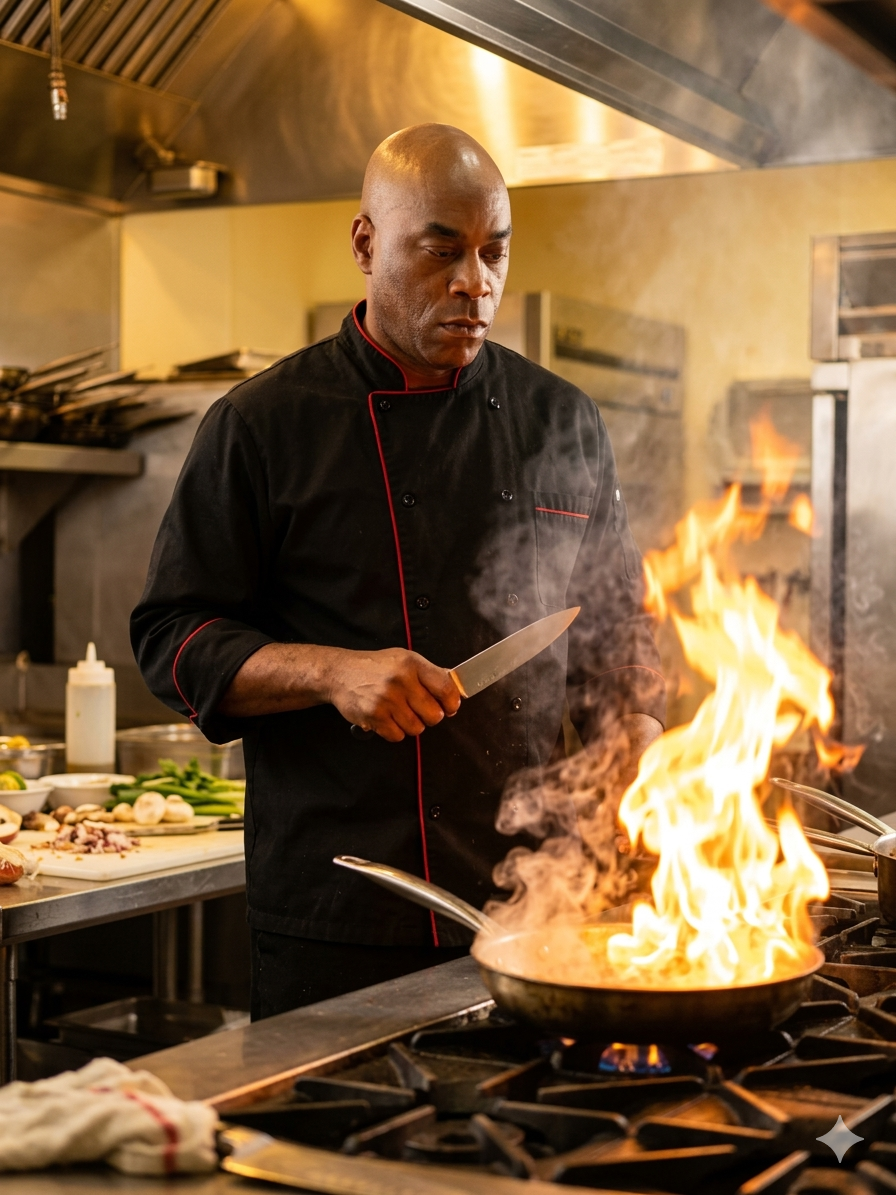
Becoming Valuable: What Makes a Cook Worth More to a Kitchen
Lesson Objective
Understand what makes a cook genuinely valuable — not just skilled — by building the behaviors that reduce friction, increase stability, and improve the room's performance in ways that matter repeatedly.
Why It Matters
Value is not just skill.
A cook becomes valuable when they reduce friction, increase stability, and improve the room's performance in ways that matter repeatedly.
Becoming valuable means thinking beyond your station.
The Core Lesson
A valuable cook: holds a station well, learns fast, communicates honestly, protects standards, helps train others, sees problems early, does not need constant supervision, saves product, saves time, and makes service easier to run. That is value. It is larger than 'can cook.' The cook who only cooks is replaceable. The cook who does all of the above is not.
One hard truth of professional life is this: the more value you bring that is hard to replace, the more the kitchen depends on you. Not because of ego — because your presence solves real operational problems. That is where advancement starts. The cook who is easy to replace will be replaced. The cook who is hard to replace will be trusted with more. The difference is not talent — it is the accumulation of valuable behaviors.
The most valuable cooks are not always the most dramatic. They are the ones who repeatedly solve real operational needs. They are the ones who make the chef's job easier, the service smoother, and the team stronger. They are the ones who show up ready, communicate clearly, maintain standards, and improve consistently. That is the profile of a cook who advances — not the loudest, not the flashiest, but the most reliably useful.
The most valuable cook in any kitchen is the one who makes everyone else better.
Example Scenario
Write two lists: - Things that make a cook easy to replace - Things that make a cook hard to replace
Easy to replace: only executes assigned tasks, needs constant supervision, creates emotional unpredictability, does not communicate problems, does not improve after correction.
Hard to replace: sees problems before they become crises, trains others effectively, communicates honestly and early, maintains standards without supervision, makes the room easier to run.
That exercise is very clarifying — it shows that replaceability is a behavior system, not a talent question.
Rookie Mistakes
- Thinking value equals skill — value is larger than cooking ability
- Needing constant supervision — this makes a cook expensive to keep
- Not communicating problems early — this creates hidden costs
- Not training others — this keeps the kitchen fragile and the cook replaceable
- Chasing dramatic performance instead of consistent operational value
The Professional Standard
Value: reduce friction, increase stability, improve the room's performance repeatedly
The more value you bring that is hard to replace, the more the kitchen depends on you
Valuable behaviors: holds station, learns fast, communicates honestly, trains others, sees problems early
The most valuable cooks repeatedly solve real operational needs
Replaceability is a behavior system — it is changed by building valuable behaviors
Chef Wisdom
"The most valuable cooks are not always the most dramatic. They are the ones who repeatedly solve real operational needs. That is where advancement starts — not from talent, but from accumulated operational value."
— 25 Years in Professional Kitchens
Workbook Reflection
Write your answers below. These are saved automatically in your browser.