Working with Difficult Chefs Without Losing Yourself
Lesson Objective
Develop the ability to work with difficult chefs without collapsing, becoming reactive, losing standards, or getting trapped in pointless battles — while still protecting your growth, integrity, and professional core.
Why It Matters
Not every chef is easy. Not every chef is fair. Not every chef is healthy.
A serious course has to tell the truth about that.
Some chefs are outstanding leaders. Some are mixed. Some are deeply difficult. The learner must know how to work with difficult chefs without collapsing, becoming reactive, losing standards, becoming passive, becoming fake, or getting trapped in pointless battles.
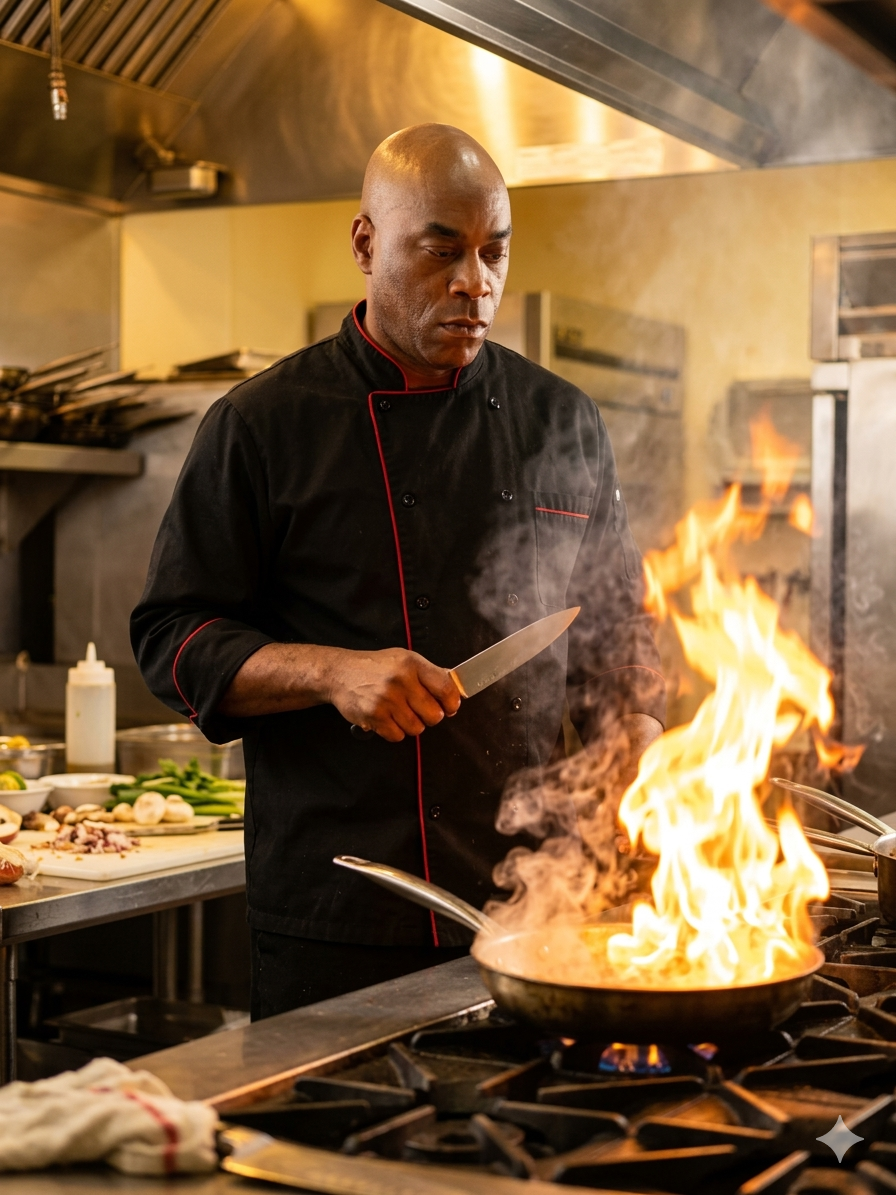
Kitchen politics are real. Navigate them with professionalism.
The Core Lesson
A chef may be difficult because they are highly demanding, inconsistent, emotionally sharp, impatient, ego-driven, poor at explaining, strong at food but weak at people, under severe pressure from above, disorganized but controlling, or personally unstable. These are not all the same. A strong cook learns to diagnose the type of difficulty — because different problems require different navigation.
The first rule of working with a difficult chef: do not fight the wrong battle. A lot of cooks lose because they keep fighting for emotional satisfaction instead of operational survival. Not every moment needs confrontation. Not every comment needs response. Not every difficult chef needs to be 'shown.' The first question is: What protects my growth, standards, and stability best in this room? That is smarter than just asking: 'Who's right?'
The second rule: protect your internal standard. Working under a difficult chef should not train you into sloppiness, dishonesty, or emotional weakness. You may need to adapt your communication style. But do not let adaptation become corruption of your professional core. Protect your honesty, your station discipline, your learning habits, your emotional control, and your self-respect. Those are non-negotiable.
The third rule: learn even from imperfect leadership. Even difficult chefs may teach standards, urgency, refinement, sequencing, and discipline. The learner should ask: What here is worth absorbing? What here is worth rejecting? What here is pressure, and what here is dysfunction? That is mature learning — extracting value from a difficult environment without being damaged by it.
Stay focused on your work. Let your performance speak.
The Three Chef Types
This chef is intense but often fair. The issue is usually tone and sharpness, not the standards themselves. Best response: listen closely, reduce repeated mistakes, don't personalize every correction, learn fast.
This chef changes expectations depending on mood, time, or pressure. Best response: document mentally what stays true, ask clarifying questions, build your own internal consistency, avoid relying on vague assumptions.
This chef needs status reinforcement and may treat correction or disagreement as personal challenge. Best response: don't feed the ego war, stay respectful and factual, avoid public unnecessary challenge, let your work speak louder than your posture.
This chef creates confusion through weak systems, then reacts to the confusion they helped cause. Best response: create as much structure as possible on your own station, clarify expectations early, don't mirror their chaos, communicate with precision.
Example Scenario
Write down one difficult authority figure you've worked under. Now divide them into: what made them hard, what they still taught you, what habits you would keep, and what habits you would never repeat if you led.
That turns pain into professional intelligence. The goal is not to become bitter — it is to extract the lessons without absorbing the dysfunction.
Rookie Mistakes
- Fighting for emotional satisfaction instead of operational survival
- Letting a difficult chef's dysfunction corrupt your own professional standards
- Mirroring the Inconsistent Chef's inconsistency instead of building your own standards
- Feeding the Ego Chef's ego war — this creates more conflict, not less
- Not extracting the real lessons because the delivery was difficult
The Professional Standard
Diagnose the type of difficulty — different problems require different navigation
First question: What protects my growth, standards, and stability best in this room?
Protect your internal standard — do not let adaptation become corruption
Learn even from imperfect leadership — extract value without absorbing dysfunction
The three rules: don't fight the wrong battle, protect your internal standard, learn from imperfect leadership
Chef Wisdom
"Working with a difficult chef is not about total submission or pointless rebellion. It is about learning how to protect your growth, keep your standards, and navigate power intelligently. That is professional maturity."
— 25 Years in Professional Kitchens
Workbook Reflection
Write your answers below. These are saved automatically in your browser.