Respecting the Chain of Command Without Becoming Weak
Lesson Objective
Develop a mature understanding of kitchen hierarchy — respecting the chain of command as a functional system while maintaining judgment, dignity, and awareness.
Why It Matters
A lot of cooks misunderstand authority in one of two ways: they resist it emotionally, or they submit to it without thought. Both are immature.
Professional maturity means respecting the chain of command while still maintaining judgment, dignity, and awareness.
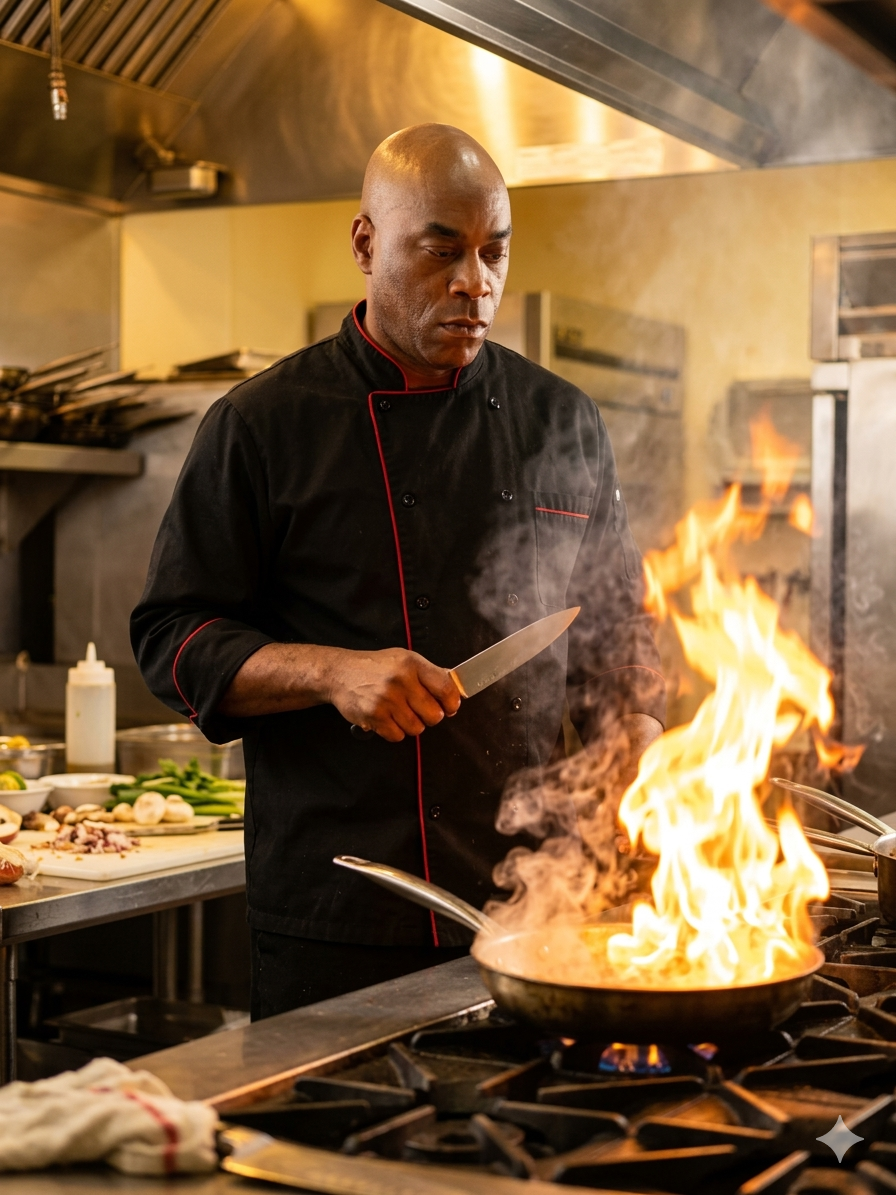
Kitchen politics are real. Navigate them with professionalism.
The Core Lesson
In kitchens, hierarchy exists because decisions must be made quickly, accountability must be clear, standards must be enforced, and service cannot become a committee. Chain of command is functional before it is symbolic. When respected properly, it creates order. Respecting authority means: knowing who decides what, bringing issues to the right level, not bypassing leadership casually, not undermining coordination, and understanding role boundaries.
Respecting authority does not mean: pretending leaders are always right, killing your own judgment, accepting abuse as professionalism, or becoming spineless. That distinction matters enormously. The mature cook learns to distinguish necessary structure from actual dysfunction — and to respond to each appropriately.
The maturity test: Am I resisting because something is actually wrong? Or because I don't like being corrected, directed, or limited? Many authority problems in kitchens are partly ego problems in disguise. When hierarchy is misused — becoming ego enforcement, fear management, inconsistent control, favoritism cover, or poor leadership shield — a serious course must say that clearly. But even then, reacting blindly often makes the learner weaker.
Stay focused on your work. Let your performance speak.
Example Scenario
Write the difference between healthy authority and unhealthy authority. Then write what a smart cook should do differently in each environment.
Healthy authority: clear standards, consistent expectations, fair correction, functional hierarchy. Smart cook response: respect it, learn from it, operate within it.
Unhealthy authority: ego enforcement, inconsistent rules, favoritism, abuse. Smart cook response: protect your internal standard, document through behavior, identify the correct escalation path, do not mirror the dysfunction.
Rookie Mistakes
- Resisting authority emotionally instead of evaluating it rationally
- Submitting without thought — this makes you complicit in dysfunction
- Not distinguishing necessary structure from actual dysfunction
- Reacting blindly to misused hierarchy — this usually makes the learner weaker
- Confusing ego resistance with principled disagreement
The Professional Standard
Chain of command is functional before it is symbolic — respect it as a system
The maturity test: Am I resisting because something is wrong, or because I don't like being corrected?
Distinguish necessary structure from actual dysfunction — and respond to each appropriately
When hierarchy is misused: protect your internal standard, do not mirror the dysfunction
The strongest cooks respect chain of command without losing their intelligence
Chef Wisdom
"Respecting chain of command is a professional skill. The strongest cooks do it without losing their intelligence. They understand that hierarchy is a functional system — and they operate within it while maintaining their own judgment and integrity."
— 25 Years in Professional Kitchens
Workbook Reflection
Write your answers below. These are saved automatically in your browser.