Earning Chef Trust in a Political Environment
Lesson Objective
Understand that chef trust is built through both performance and political maturity — and develop the specific behaviors that earn and protect trust in a complex social environment.
Why It Matters
Trust with chef is not built in a vacuum. It is built inside a room where people compare, people notice, people talk, people interpret, and people remember.
That means earning trust is partly technical, partly political. A cook must understand both.
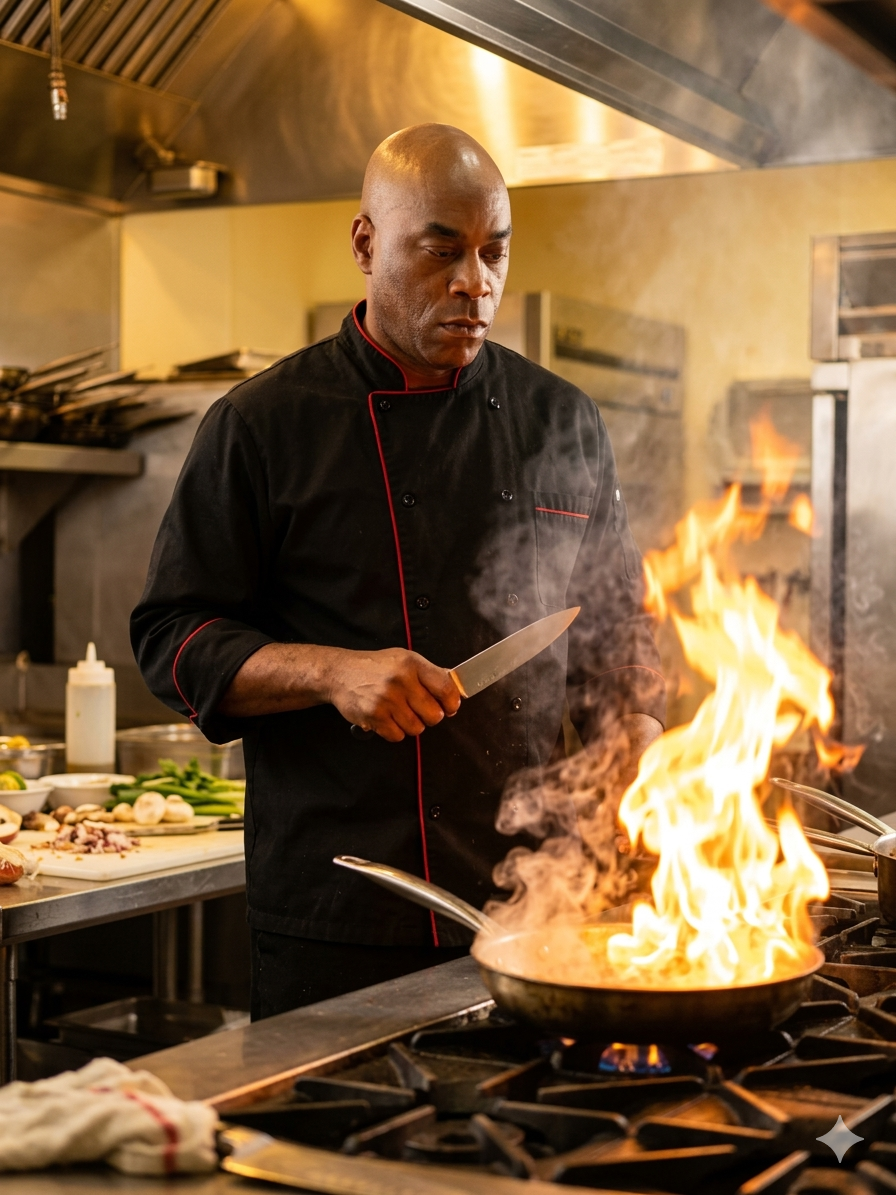
Kitchen politics are real. Navigate them with professionalism.
The Core Lesson
Chef trust usually grows from: consistency, honesty, responsiveness to correction, visible discipline, reduced need for supervision, pattern improvement, and reliability under pressure. But trust is also political because chef's perception of you is shaped by what others say, how you behave socially, who you align with, what patterns become visible in the room, and whether you create extra management burden. This is why a technically good cook can still struggle to earn full trust if they are socially messy, emotionally reactive, or repeatedly aligned with dysfunction.
Chefs relax around cooks who reduce uncertainty. That means your times are honest, your station does not lie, your behavior is predictable in a good way, your standards do not swing wildly, and you do not become a mystery under pressure. The more uncertainty you remove, the more leadership trusts you. This is the most actionable trust-building principle in the course — reduce uncertainty, and trust grows almost automatically.
Political behaviors that quietly damage trust: gossiping upward or downward, repeated excuse framing, visible resentment, choosing loyalty to drama over loyalty to standards, letting others define your reputation, and pretending to have things under control when you don't. These do damage even if the food looks fine some nights. Trust is not just about the food — it is about the whole picture of how you operate in the room.
Stay focused on your work. Let your performance speak.
Example Scenario
Write 10 behaviors that would make a chef trust a cook more. Then write 10 behaviors that would quietly erode that trust even if the cook has decent technical skill.
Trust builders: honest times, consistent station, early problem surfacing, responsive to correction, low drama, reliable backup levels, honest about mistakes.
Trust eroders: excuse framing, visible resentment, gossiping, pretending things are fine when they're not, inconsistent standards, creating management burden.
Rookie Mistakes
- Thinking trust is only about food quality — it is about the whole picture of how you operate
- Gossiping upward or downward — this is one of the fastest trust eroders
- Pretending to have things under control when you don't — this destroys trust when the reality becomes visible
- Letting others define your reputation — take deliberate control of your own story
- Not understanding that chef trust is partly political — social behavior affects operational trust
The Professional Standard
Chef trust: consistency, honesty, responsiveness to correction, reduced supervision need
Chefs relax around cooks who reduce uncertainty — make your behavior predictable in a good way
Trust is partly political — social behavior affects how chef perceives your operational reliability
Political trust eroders: gossiping, excuse framing, visible resentment, pretending things are fine
Reduce uncertainty and trust grows — this is the most actionable trust-building principle
Chef Wisdom
"Chef trust is earned through performance, but it is protected through political maturity. The cook who understands both dimensions of trust is the cook who builds it fastest and keeps it longest."
— 25 Years in Professional Kitchens
Workbook Reflection
Write your answers below. These are saved automatically in your browser.