Preparing Your Station Before Service
Lesson Objective
Build a systematic pre-service station preparation routine that ensures every item is in the right place, at the right quantity, and ready to execute before the first ticket drops.
Why It Matters
The quality of your service begins before service starts. A cook who sets up correctly is calm, fast, and in control from the first ticket. A cook who sets up poorly is reactive, scrambling, and making mistakes from the start. Pre-service preparation is where the rush is won or lost.
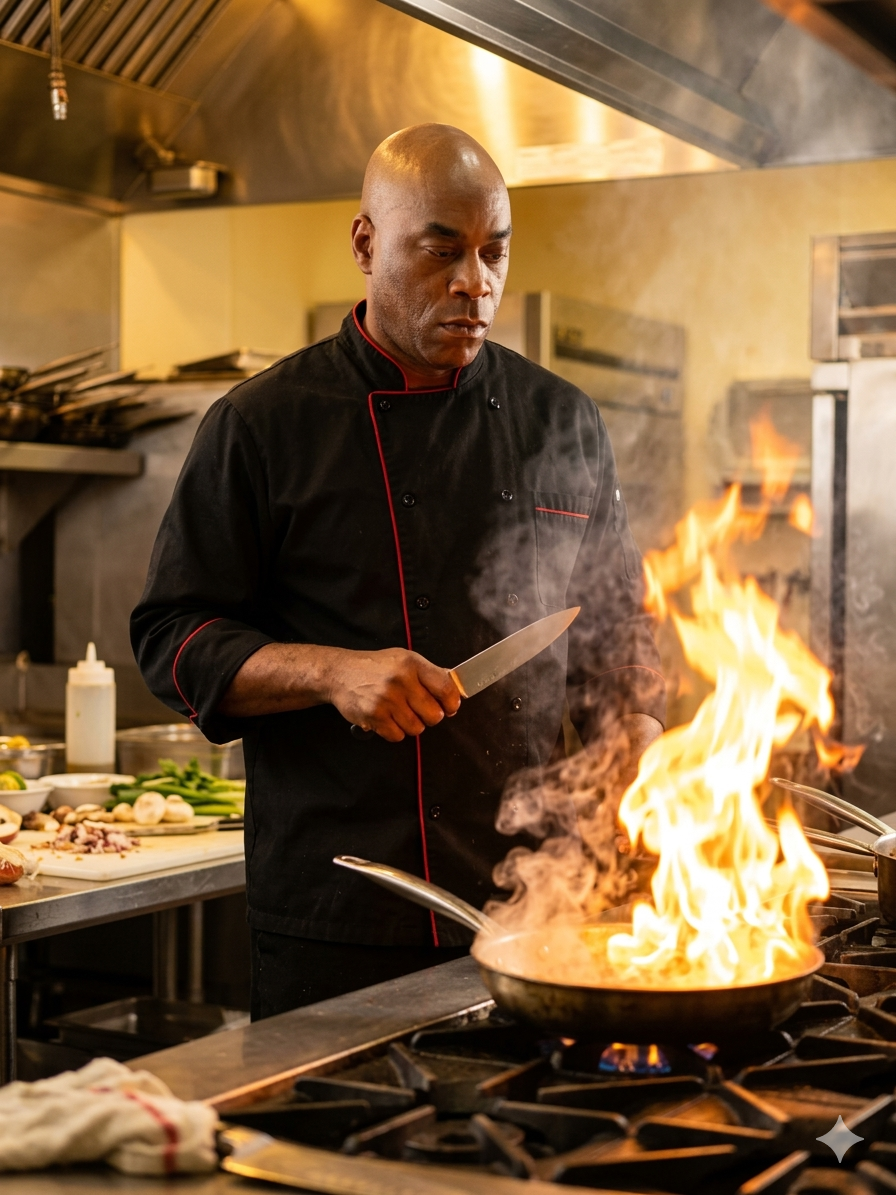
Kitchen control systems: the frameworks that make great kitchens run consistently.
The Core Lesson
Pre-service preparation is the process of building your station into a ready state — everything in its place, everything at the right quantity, everything within reach — before service begins. It is the physical expression of mise en place.
The first step is **reading the menu and specials**. Before you touch anything on your station, you need to know what you are cooking tonight. Are there new specials? Are any items 86'd? Are there large reservations that will spike demand for specific dishes? This information shapes everything about how you set up.
The second step is **checking your inventory**. Walk through every item on your station and verify quantity against your par. If anything is below par, get it now — not during service. Protein counts, sauce quantities, garnish prep, backup containers — all of it needs to be verified before service.
The third step is **organizing by reach zone**. The items you use most frequently should be within arm's reach without moving your feet. Items used less frequently can be slightly further away. Items used rarely can be at the back or below. This is not a preference — it is a performance system. Every extra step you take during service is time you don't have.
The fourth step is **temperature verification**. Hot holding equipment should be at temperature. Cold holding should be cold. Proteins that need to temper should be pulled at the right time. A steak that goes on the grill straight from the walk-in will cook differently than one that has been tempered — and during a rush, you don't have time to compensate.
The fifth step is **tool check**. Every tool you need should be on your station: tongs, spatulas, spoons, timers, thermometers, towels, squeeze bottles. Missing a tool during service is not a minor inconvenience — it is a gap in your execution that affects every table.
The sixth step is **the mental walkthrough**. Before service starts, close your eyes and walk through your busiest ticket in your head. Where does your hand go first? What do you fire first? Where is everything? If anything is unclear or missing, fix it now.
Systems replace reliance on individual talent. Great kitchens run on systems.
Example Scenario
Two cooks set up for a Friday dinner service. Cook A spends 45 minutes on setup: reads the specials, checks par on every item, organizes by reach zone, verifies temperatures, and does a mental walkthrough. Cook B spends 20 minutes and figures the rest out as it comes. At 7 PM when the rush hits, Cook A is executing cleanly — every item is where it should be, every quantity is right. Cook B is making three extra trips to the walk-in, running out of garnish mid-service, and falling behind. Same kitchen, same menu, completely different outcomes — determined entirely by setup.
Rookie Mistakes
- Setting up by habit rather than by reading tonight's menu and specials
- Not verifying par levels before service — discovering shortages during the rush
- Organizing by convenience rather than by frequency of use
- Skipping temperature verification and discovering cold equipment during service
- Not doing a tool check and borrowing tools from other stations during service
The Professional Standard
A professional cook arrives early enough to complete a full setup before service. They read the menu, verify par, organize by reach zone, check temperatures, confirm tools, and do a mental walkthrough. Their station is ready before the first ticket drops — not after.
Chef Wisdom
"The rush does not start when the tickets come in. The rush starts the moment you walk in the door. Every minute of setup time is a minute you are winning the rush before it begins. The cook who is still setting up when the first ticket drops has already lost."
— 25 Years in Professional Kitchens
Workbook Reflection
Write your answers below. These are saved automatically in your browser.
Extended Study
Pre-service preparation is the culinary application of what cognitive scientists call 'environmental design' — structuring your physical environment to support optimal performance. Research in human factors and ergonomics shows that reaching beyond the 'primary work zone' (approximately 14 inches from the body) increases task time by 15-30% and error rates by 20-40%. In a kitchen context, this means that a cook who has to take one extra step to reach a sauce bottle during service will lose approximately 2-3 seconds per ticket — which over 100 covers translates to 3-5 minutes of lost time. The concept of 'mise en place' as a mental discipline, not just a physical one, is explored in depth in Michael Ruhlman's 'The Making of a Chef' and Thomas Keller's 'The French Laundry Cookbook,' both of which describe pre-service preparation as the foundation of professional kitchen performance.
Kitchen Simulation
It is 4:30 PM. Service starts at 5:30 PM. You are on the sauté station. Tonight's specials include a new pan-seared halibut with a beurre blanc sauce you haven't made before. You have 60 minutes. Walk through your complete setup process: what you check, what you prep, how you organize, and what you do in the final 10 minutes before service.
Mastery Questions
Can you answer these without looking back? These are the questions your certification exam will draw from.
- 1What is the correct order of steps in a professional pre-service station setup?
- 2Why does reach zone organization matter for service performance?
- 3A cook discovers during service that they are out of a key garnish. What setup failure caused this?
- 4What is the purpose of a mental walkthrough before service?
- 5How does reading the specials before setup change how you prepare your station?
Take It to the Kitchen
For your next three services, time your setup and document every item you had to get during service that should have been ready before service. After three services, identify your three most common setup gaps and build a pre-service checklist that eliminates them.
Study Thomas Keller's mise en place philosophy in 'The French Laundry Cookbook'Research ergonomic workstation design principles and how they apply to kitchen station organizationPractice the mental walkthrough technique before each service for one month and track the impact on your performance