
How Chefs Evaluate Cooks
Lesson Objective
Understand the 8 specific criteria professional chefs use to evaluate line cooks, and develop the behaviors that lead to trust, responsibility, and promotion.
Why It Matters
Most cooks believe they are judged only on how their food tastes. This belief is one of the most expensive misconceptions in the culinary profession. In reality, a chef's evaluation of a cook is continuous, multi-dimensional, and almost entirely behavioral. A cook can produce technically correct food and still be passed over for promotion — because the chef has observed patterns of disorganization, poor communication, or unreliability that make that cook a liability at higher responsibility levels. Understanding how chefs actually evaluate performance allows you to develop the right behaviors deliberately, rather than hoping they emerge naturally over time.
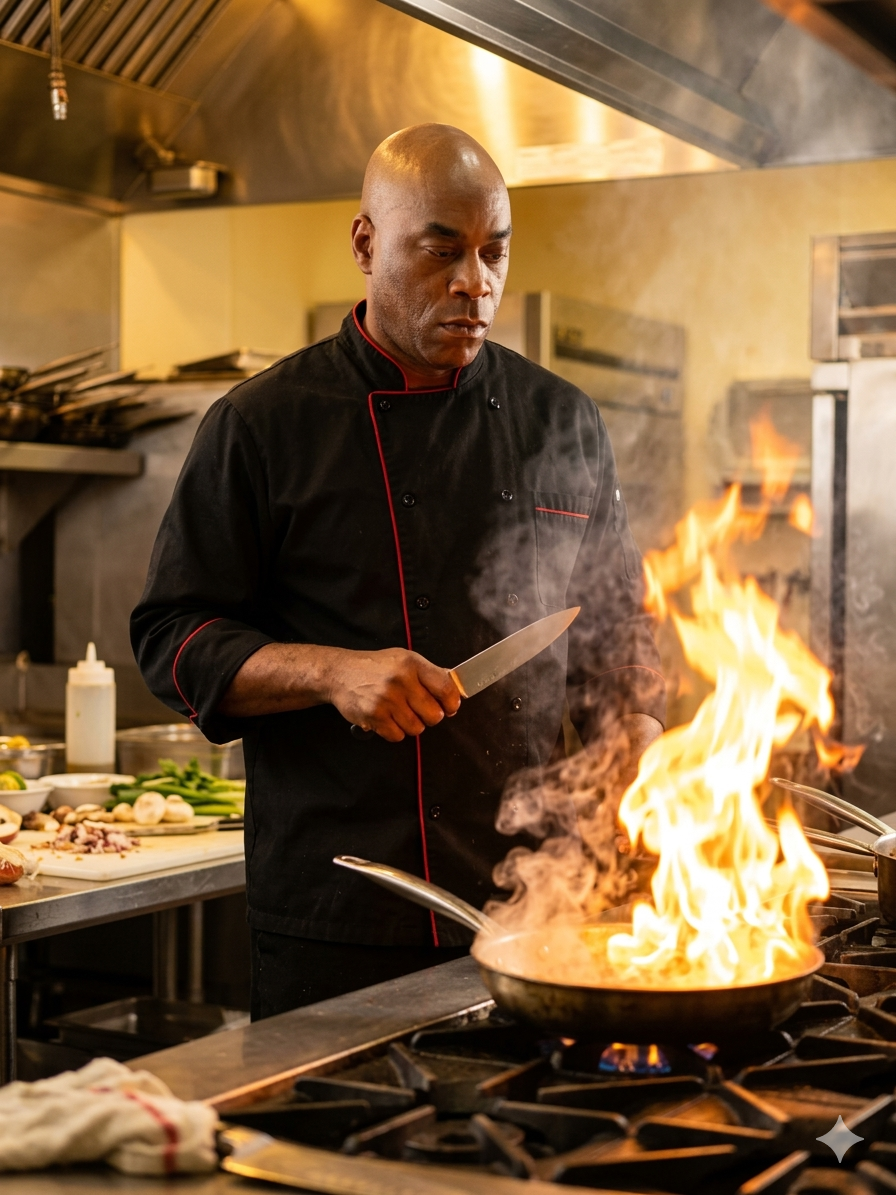
Kitchen control systems: the frameworks that make great kitchens run consistently.
The Core Lesson
Professional kitchens are performance environments. Every cook on the line is being observed by the chef, the sous chef, and the entire team — constantly, and often without the cook realizing it. A chef may appear focused on tickets or plating, but experienced chefs develop peripheral awareness of the entire kitchen. They notice how you move, how you organize your station, how you communicate, and how you respond when things go wrong.
This evaluation is not a formal process. There is no annual review. The chef forms a continuous, real-time judgment about each cook based on accumulated observations. Over weeks and months, these observations solidify into a clear picture: this cook can be trusted with more, or this cook is not ready yet.
Promotion in the kitchen rarely happens because someone asks for it. Promotion happens because a chef becomes confident — through direct observation — that a cook can handle greater responsibility without creating problems. Understanding what chefs are watching for allows you to develop those behaviors intentionally.
Systems replace reliance on individual talent. Great kitchens run on systems.
The Three Chef Types
Clean surfaces, organized ingredients, tools in consistent positions, backup ready. The first thing a chef sees when scanning the line.
Efficient, calm movement even during intense service. Thinks clearly and executes in the correct order. Does not rush blindly.
Short, clear, proactive calls: 'Two steaks working.' 'Fries dropping.' 'Pasta walking.' 'Behind.' 'Corner.' Demonstrates awareness of the whole kitchen.
Acknowledges mistakes immediately, starts correcting, informs expo. No defensiveness, no blame, no hiding.
Shows up on time, prepared. Completes prep thoroughly. Maintains station without reminders. Closes properly every night.
Understands that their success depends on the line's success. Assists other stations when capacity allows. Demonstrates leadership potential.
Corrects mistakes quickly. Improves performance over time. Does not repeat the same error. Retains feedback.
Thinks beyond their own station. Observes how the kitchen operates. Anticipates problems before they occur. Begins thinking about the whole system.
Example Scenario
Two cooks join the same kitchen in the same week. Both have similar technical skills. After 60 days, one is given additional responsibilities and is being considered for a station lead role. The other is still on the same tasks they started with. The difference is not cooking ability — it is the pattern of behaviors the chef has observed. The first cook consistently arrives early, maintains a clean station, communicates proactively during service, and handles mistakes without drama. The second cook is technically capable but reactive — the station gets messy during rushes, communication is inconsistent, and mistakes are occasionally minimized rather than addressed directly. The chef has noticed all of this. The evaluation was never announced. It was always happening.
Rookie Mistakes
- Believing that cooking skill alone determines advancement — ignoring the behavioral and organizational dimensions of evaluation
- Waiting to be told what to do rather than demonstrating initiative and awareness
- Responding to mistakes defensively or minimizing them rather than acknowledging and correcting immediately
- Treating communication as optional — staying silent during service instead of calling out timing and status
- Allowing the station to become disorganized during rushes and only cleaning up after service ends
- Asking the same questions repeatedly — signaling that learning is not being retained
The Professional Standard
Station control is maintained throughout service — not just before and after
Communication is proactive, short, and accurate — the chef never has to ask what is happening
Mistakes are acknowledged immediately and corrected without drama
Reliability is consistent — not just on good days, but especially on hard ones
Team awareness is demonstrated by supporting other stations when capacity allows
Chef Wisdom
"The cooks who get promoted are not always the most talented. They are the most reliable. Talent gets you hired. Reliability gets you trusted. Trust gets you promoted. A chef will always choose a cook they can count on over a cook who is brilliant but unpredictable."
— 25 Years in Professional Kitchens
Workbook Reflection
Write your answers below. These are saved automatically in your browser.
Extended Study
The psychology of chef evaluation is rooted in what organizational researchers call 'behavioral observation' — the systematic pattern-matching that experienced managers perform unconsciously. Chefs are not running formal assessments; they are building mental models of each cook's reliability profile. Research in high-performance team environments consistently shows that reliability and communication are weighted more heavily than raw skill in promotion decisions, because skilled but unreliable team members create systemic risk. In a kitchen, that risk is immediate and visible — a cook who cannot be trusted to communicate or maintain their station during a rush puts every plate on the pass at risk. The 8 criteria above are not arbitrary — they map directly to the behavioral dimensions that determine whether a cook reduces or increases the chef's cognitive load during service.
Kitchen Simulation
You are three weeks into a new kitchen. The chef has not spoken to you directly about your performance. But you have noticed that the sous chef consistently asks the cook next to you — not you — to help with special prep tasks. Using the 8 evaluation criteria, identify what behaviors might be causing this pattern. Write out what you would change in your next 5 shifts to shift the chef's perception of you.
Mastery Questions
Can you answer these without looking back? These are the questions your certification exam will draw from.
- 1A chef promotes a cook who is technically average but consistently reliable over a more talented cook who is unpredictable. What principle does this illustrate?
- 2During a rush, you burn a steak. What is the professional response — and what is the response that damages your reputation?
- 3Name three specific communication calls used on the line and explain what each one signals to the rest of the kitchen.
- 4What does 'team awareness' look like in practice during a service where the fry station is overwhelmed?
- 5A new cook asks the same question about a dish three times in two weeks. What does this signal to the chef — and what should the cook do differently?
Take It to the Kitchen
During your next three shifts, keep a private log. After each shift, rate yourself 1–5 on each of the 8 evaluation criteria. At the end of three shifts, identify your lowest-scoring area and write a specific behavioral plan to improve it over the following two weeks.
Module 8, Lesson 78: Becoming Reliable — the deeper framework for building reliability as a professional identityModule 9, Lesson 88: Judging Employee Performance — see the evaluation criteria from the chef's perspectiveModule 9, Lesson 90: Getting Promoted — what happens after the chef decides you are readyKitchen Warfare Episode 18: How Chefs See the Line — the YouTube companion to this lesson