Dropping Ahead — Reading Demand Before It Arrives
Lesson Objective
Develop the skill of reading ticket pace and kitchen rhythm to prepare items before they are ordered — the technique that separates reactive cooks from proactive ones.
Why It Matters
Dropping ahead is one of the most advanced practical skills in kitchen operations. It requires reading the room, understanding patterns, and making decisions about what to prepare before you have confirmation you will need it. Done correctly, it makes service faster and smoother. Done incorrectly, it creates waste. Learning to read demand is what separates experienced line cooks from beginners.
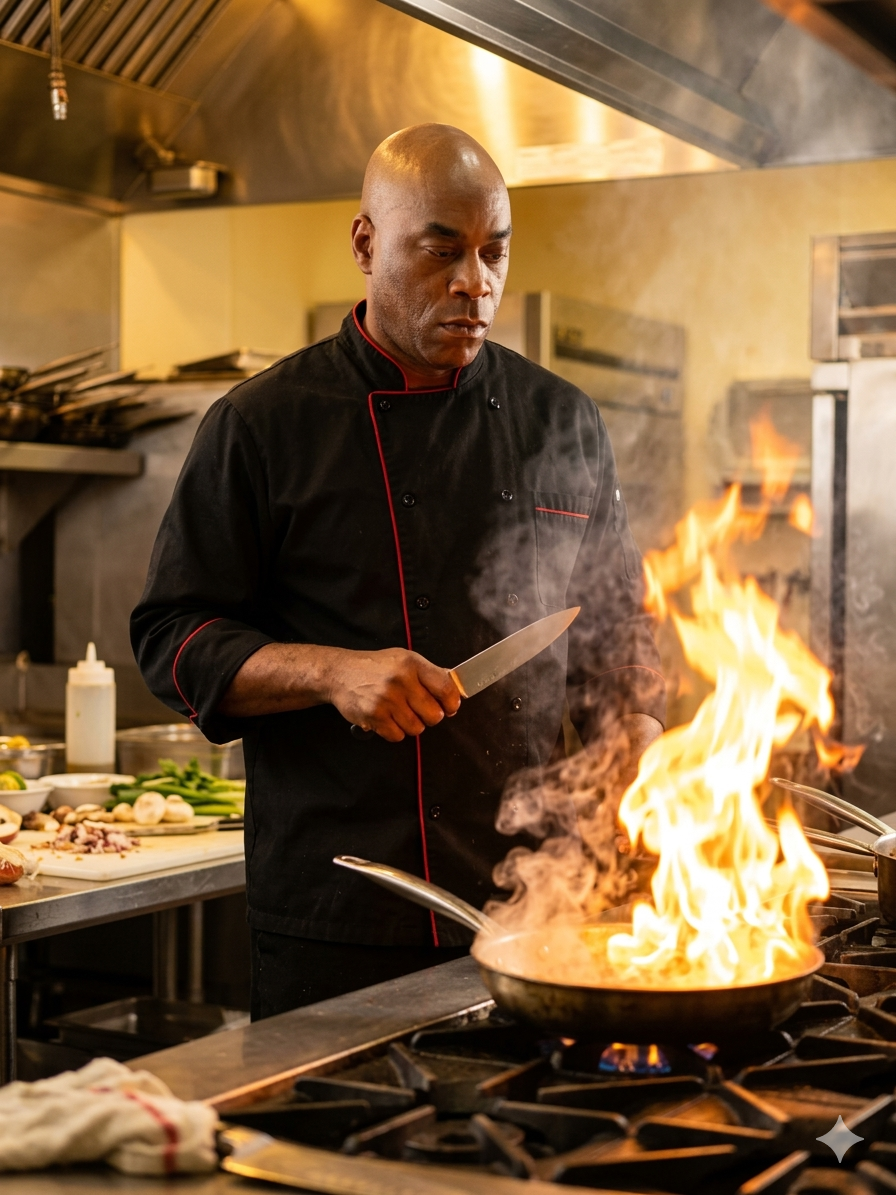
Kitchen control systems: the frameworks that make great kitchens run consistently.
The Core Lesson
Dropping ahead means preparing items in anticipation of demand — before the ticket arrives. A fry cook who drops a batch of fries when they see a table of 8 being seated is dropping ahead. A grill cook who puts two steaks on when they see the server approaching with a ticket is dropping ahead.
The foundation of dropping ahead is **pattern recognition**. Every restaurant has patterns: certain dishes sell more on certain nights, certain tables order certain things, certain times of service generate certain ticket types. A cook who has worked a station for a few weeks begins to see these patterns and can anticipate demand.
The first type of dropping ahead is **time-based**. Certain items have long cooking times and must be started before the ticket is confirmed. A braise that takes 45 minutes cannot wait for a ticket — it must be started during prep based on projected demand. A roast chicken that takes 35 minutes must be fired before the table is fully seated.
The second type is **volume-based**. When the restaurant is full and tickets are coming in fast, certain high-frequency items should be running continuously. A fry station during a Friday rush should have fries dropping constantly — not waiting for each individual ticket.
The third type is **observation-based**. Watching the dining room, the host stand, and the expo station gives cooks information about what is coming. A large party being seated means volume is about to spike. A server running to the kitchen means something needs to be fired immediately.
The risk of dropping ahead is **waste**. If you prepare items that don't get ordered, they must be held or discarded. The professional skill is calibrating how far ahead to drop based on confidence in the demand signal. High confidence (a confirmed large party with a known menu) justifies more aggressive dropping ahead. Low confidence (a slow Tuesday night) requires more conservative preparation.
Systems replace reliance on individual talent. Great kitchens run on systems.
Example Scenario
It is 7:15 PM on a Saturday. The restaurant is full. The fry cook has been watching ticket pace — they are getting 8-10 tickets every 10 minutes, and 70% include fries. Rather than waiting for each ticket to drop a new batch, the cook is running two baskets continuously, staggering drops by 3 minutes to ensure a constant supply of fresh fries. When a ticket comes in with fries, the cook already has product ready. The table gets their fries 90 seconds faster than if the cook had waited for the ticket.
Rookie Mistakes
- Waiting for a ticket before starting any preparation — purely reactive cooking
- Dropping ahead aggressively on slow nights and generating waste
- Not watching the dining room for demand signals
- Dropping ahead based on personal preference rather than actual patterns
- Not communicating with expo about what is running ahead
The Professional Standard
A professional cook reads ticket pace, dining room occupancy, and service patterns to anticipate demand. They drop ahead on high-confidence items during busy service and hold back on slow nights. They communicate with expo about what is running so the front of house can set accurate expectations.
Chef Wisdom
"The best cooks are not just reacting to what is happening — they are anticipating what is about to happen. When you can read the kitchen well enough to prepare for demand before it arrives, you stop being a cook who survives service and start being a cook who controls it."
— 25 Years in Professional Kitchens
Workbook Reflection
Write your answers below. These are saved automatically in your browser.
Extended Study
Dropping ahead is the culinary application of what operations researchers call 'demand forecasting' — using historical patterns and real-time signals to predict future demand and prepare accordingly. In manufacturing, this is called 'just-in-time' production when applied conservatively, or 'make-to-stock' production when applied aggressively. The restaurant kitchen operates in a hybrid mode: some items must be made to stock (stocks, sauces, braises) while others must be made to order (proteins, eggs, delicate preparations). The skill of calibrating between these modes in real time — reading demand signals accurately enough to prepare ahead without generating waste — is one of the most sophisticated operational skills in food service.
Kitchen Simulation
It is 6:45 PM on a Friday. You are on the fry station. The restaurant is at 80% capacity and filling fast. In the last 20 minutes, you have received 15 tickets: 12 included fries, 8 included onion rings, 3 included both. You have 4 lbs of fries prepped and 2 lbs of onion rings. Service typically peaks at 7:30 PM. What do you drop ahead right now, and what is your dropping-ahead strategy for the next 90 minutes?
Mastery Questions
Can you answer these without looking back? These are the questions your certification exam will draw from.
- 1What is the difference between time-based, volume-based, and observation-based dropping ahead?
- 2What is the primary risk of dropping ahead and how do you calibrate against it?
- 3A cook on the fry station during a Friday rush is waiting for each ticket before dropping fries. What is wrong with this approach?
- 4How does watching the dining room help a line cook make better dropping-ahead decisions?
- 5When should a cook NOT drop ahead aggressively?
Take It to the Kitchen
For your next three services, track your dropping-ahead decisions: what you dropped ahead, when, why, and whether it was correct (used vs. wasted). After three services, identify your most reliable demand signals and your most common dropping-ahead mistakes.
Study demand forecasting principles in restaurant operations managementResearch how high-volume restaurants use prep sheets and projected covers to plan dropping-ahead schedulesPractice reading ticket pace by counting tickets per 10-minute window during service for one month