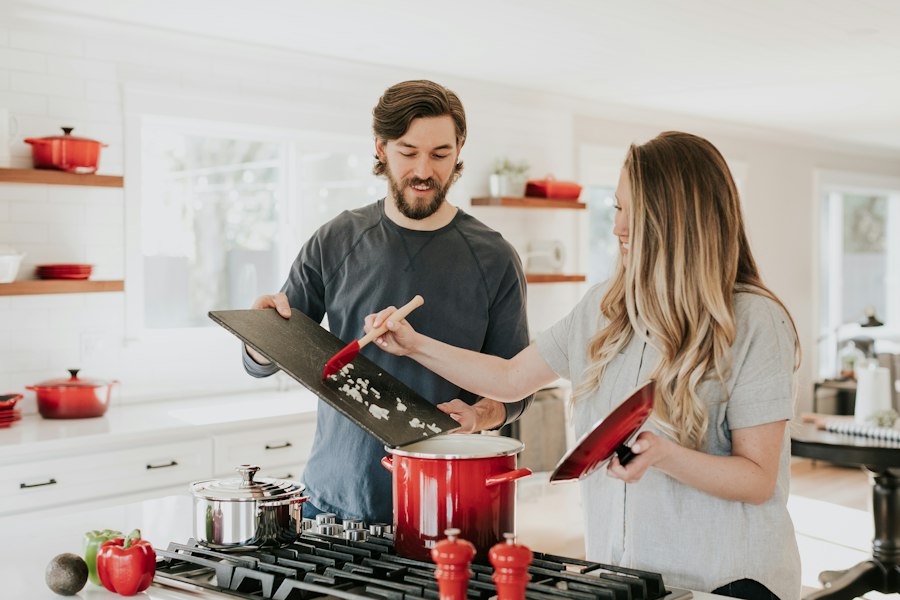
Cleaning During Service
Lesson Objective
Understand clean-as-you-go not as a hygiene rule but as a performance system — and build the habits that keep your station clean, organized, and functional throughout service.
Why It Matters
A dirty station is a slow station. Clutter creates confusion, spills create hazards, and disorganization creates mistakes. The cook who cleans during service is not just being hygienic — they are protecting their own performance. Clean-as-you-go is a competitive advantage.
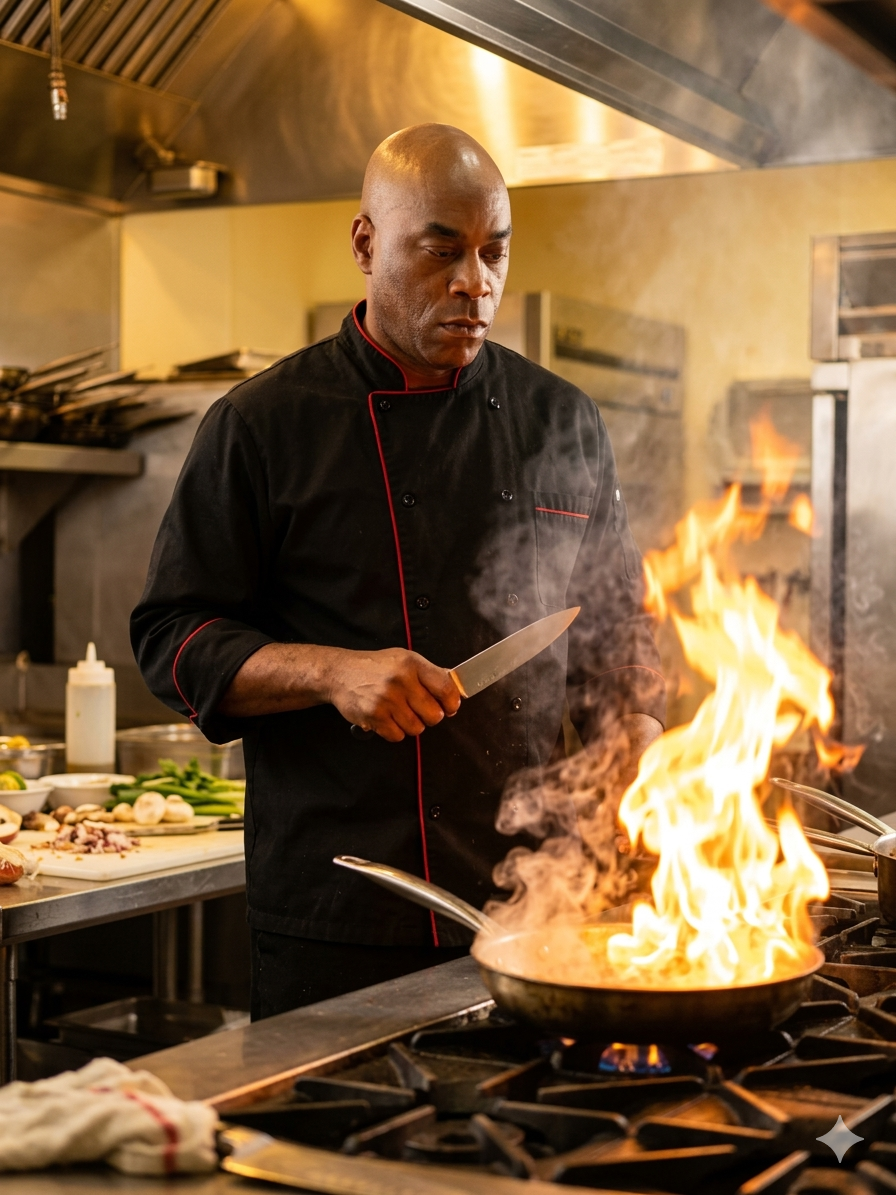
Kitchen control systems: the frameworks that make great kitchens run consistently.
The Core Lesson
Clean-as-you-go means cleaning and organizing your station continuously throughout service — not waiting until service ends to address the mess that has accumulated. It is a discipline, not a task.
The first principle is **passive moments**. Every service has micro-pauses — the 30 seconds between tickets, the moment while a protein is resting, the gap while waiting for a sauce to reduce. These moments are cleaning opportunities. A cook who uses passive moments to wipe down surfaces, consolidate containers, and organize tools maintains a clean station without ever stopping to clean.
The second principle is **immediate spill response**. When something spills, it gets cleaned immediately — not after the next ticket, not at the end of service. A spill that sits becomes a slip hazard, a contamination risk, and a distraction. The three seconds it takes to wipe a spill is always worth it.
The third principle is **container consolidation**. As service progresses, containers empty. An empty container on your station is clutter. When a container is empty or nearly empty, it gets consolidated with another container or removed from the station. This keeps the station organized and prevents the accumulation of debris.
The fourth principle is **tool discipline**. Tools that are not in use should be in their designated place — not scattered across the station. A tong that is not in use goes back in its holder. A spoon that is not in use goes in the spoon rest. This takes one extra second per tool and prevents the chaos of a station where nothing is where it should be.
The fifth principle is **reset between waves**. When a wave of tickets clears and there is a brief lull, use it to reset the station to its starting condition: wipe surfaces, consolidate containers, restock depleted items, and organize tools. This ensures that the next wave starts from a clean, organized position rather than from the chaos of the previous one.
Systems replace reliance on individual talent. Great kitchens run on systems.
Example Scenario
Two cooks are working adjacent stations during a busy Friday service. Cook A cleans as they go — wiping spills immediately, consolidating containers during passive moments, resetting between waves. By the end of service, their station looks almost as clean as it did at setup. Cook B saves cleaning for the end — they will deal with it after service. By the end of service, Cook B's station is covered in spills, empty containers, and scattered tools. Cook B's closing takes 45 minutes. Cook A's closing takes 15 minutes. Cook A also made fewer mistakes during service because their station was organized throughout.
Rookie Mistakes
- Saving all cleaning for after service
- Ignoring spills because 'I'll get it later'
- Leaving empty containers on the station because there's no time to deal with them
- Not using passive moments for cleaning
- Treating cleaning as separate from cooking rather than integrated with it
The Professional Standard
A professional cook's station looks organized throughout service — not just at setup and not just after closing. Spills are addressed immediately. Passive moments are used for cleaning. Containers are consolidated as they empty. Tools are returned to their designated places after use. The station resets between waves.
Chef Wisdom
"The room is always trying to convince you to postpone cleaning. There's always another ticket, always something more urgent. But the cook who postpones cleaning is borrowing time from their future self — and the interest rate is high. Clean now, cook better later."
— 25 Years in Professional Kitchens
Workbook Reflection
Write your answers below. These are saved automatically in your browser.
Extended Study
Clean-as-you-go is the culinary application of the '5S' methodology from lean manufacturing: Sort (remove unnecessary items), Set in order (organize what remains), Shine (clean continuously), Standardize (make it a system), and Sustain (maintain the system). Research in industrial psychology shows that cluttered work environments increase cognitive load — the mental effort required to process information — by 15-25%. In a kitchen context, this means that a disorganized station requires more mental energy to navigate, leaving less cognitive capacity for the complex timing and coordination demands of service. The cook who maintains a clean station is not just more hygienic — they are cognitively sharper.
Kitchen Simulation
It is 7:30 PM on a Saturday. You are on the sauté station. The last wave of 12 tickets just cleared. Your station has: 3 empty sauce containers, a spill of butter near the burners, 2 pans that need to be returned to the dish station, scattered tongs and spoons, and a depleted container of herbs. You have approximately 4 minutes before the next wave hits. Walk through exactly what you do in those 4 minutes to reset your station.
Mastery Questions
Can you answer these without looking back? These are the questions your certification exam will draw from.
- 1What are the five principles of clean-as-you-go discipline?
- 2Why is immediate spill response more important than waiting until a lull to clean?
- 3What is a 'passive moment' and how should it be used during service?
- 4How does a clean station affect a cook's cognitive performance during service?
- 5Describe the station reset procedure for a lull between waves.
Take It to the Kitchen
For your next five services, consciously practice clean-as-you-go. After each service, rate your station cleanliness on a scale of 1-10 at the end of service. Track whether your rating improves over the five services and document which specific habits made the biggest difference.
Study the 5S methodology from lean manufacturing and its application to kitchen operationsResearch the relationship between workspace organization and cognitive performancePractice the 'passive moment' cleaning technique for one month and track its impact on your closing time