The Professional Discipline Standard — How Chefs Evaluate Cooks
Lesson Objective
Understand the specific criteria by which experienced chefs evaluate a cook's operational discipline — and build the habits that make you the cook every chef wants on their team.
Why It Matters
Technical cooking skill is table stakes. Every cook who lasts more than a few months develops adequate technique. What separates the cooks who advance from the cooks who plateau is operational discipline — the habits, systems, and standards that make a cook reliable, trustworthy, and valuable beyond their cooking ability. This is what chefs are actually evaluating.
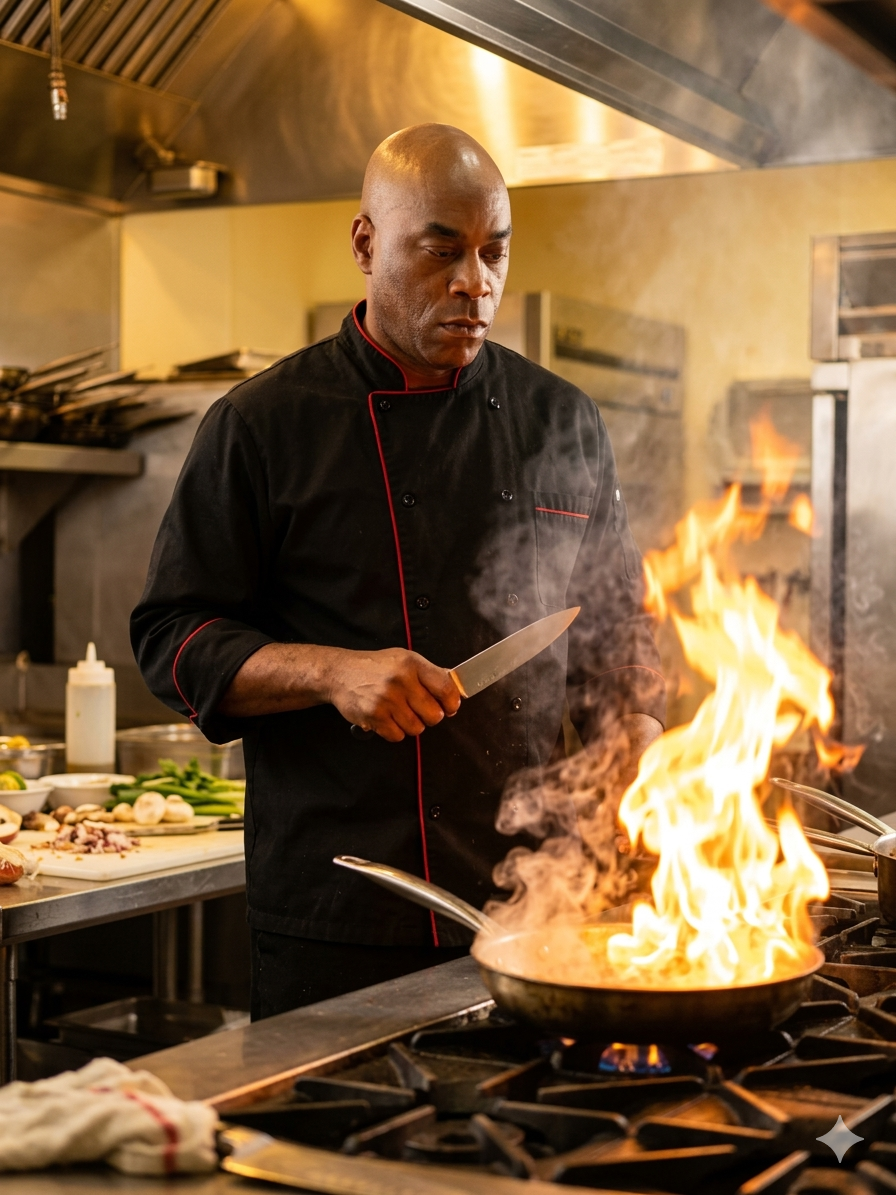
Kitchen control systems: the frameworks that make great kitchens run consistently.
The Core Lesson
When a chef watches a cook work, they are not primarily watching technique. They are watching discipline. They are asking: Does this cook maintain their station without being told? Do they clean as they go? Do they rotate product correctly? Do they communicate proactively? Do they solve problems or create them?
The **Five Discipline Criteria** that experienced chefs use to evaluate cooks are: Organization, Consistency, Cleanliness, Communication, and Ownership.
**Organization** is evaluated by watching how a cook sets up, maintains, and closes their station. A cook who sets up the same way every time, maintains organization throughout service, and closes completely is demonstrating organizational discipline. A cook whose station is chaotic by mid-service, who can't find things during the rush, or who leaves a messy close is demonstrating organizational weakness.
**Consistency** is evaluated by watching whether a cook performs the same way on a Tuesday night as on a Saturday night. Consistency means the same setup, the same standards, the same quality — regardless of how busy it is, how tired the cook is, or how much pressure they are under. Inconsistency is one of the most career-limiting traits a cook can have.
**Cleanliness** is evaluated continuously — not just at close. A chef who walks by a station at 7:30 PM on a Saturday and sees a clean, organized station is seeing discipline in action. A chef who sees a station covered in spills and clutter is seeing a cook who does not understand that cleanliness is a performance standard, not just a hygiene requirement.
**Communication** is evaluated by watching whether a cook proactively shares information — calling out timing, flagging problems before they become crises, asking for help before they fall behind. A cook who communicates well makes the entire kitchen more efficient. A cook who stays silent and struggles alone creates bottlenecks and surprises.
**Ownership** is the highest-level criterion. It is evaluated by watching whether a cook treats their station as their responsibility — not just when the chef is watching, but always. Ownership means fixing problems without being asked, maintaining standards without being reminded, and caring about the kitchen's success as if it were their own.
The cook who demonstrates all five criteria consistently is the cook who gets promoted, gets more responsibility, and builds a career. The cook who demonstrates them only when being watched is the cook who stays in the same position indefinitely.
Systems replace reliance on individual talent. Great kitchens run on systems.
Example Scenario
Two cooks have been at the same restaurant for 8 months. Both have similar technical skills. Cook A sets up the same way every service, cleans as they go, communicates proactively, and closes completely — whether the chef is watching or not. Cook B performs well when the chef is present but cuts corners when unsupervised. After 8 months, Cook A is being considered for a sous chef position. Cook B is still on the same station. The chef's evaluation was not based on a single observation — it was based on 8 months of watching both cooks when they thought no one was looking.
Rookie Mistakes
- Performing to a higher standard only when the chef is watching
- Treating discipline as a set of rules to follow rather than a professional identity
- Waiting to be told to clean, organize, or communicate rather than doing it proactively
- Confusing technical skill with professional value
- Not understanding that every service is an evaluation
The Professional Standard
A professional cook demonstrates the five discipline criteria — Organization, Consistency, Cleanliness, Communication, and Ownership — consistently, regardless of whether they are being observed. They understand that their professional reputation is built not through occasional excellence but through daily discipline.
Chef Wisdom
"I have worked with cooks who could cook circles around everyone else in the kitchen but never advanced because they couldn't be trusted to maintain standards when no one was watching. And I have worked with cooks of average technical skill who became sous chefs in two years because they were the most disciplined people in the building. Discipline is the multiplier. It takes whatever skill you have and makes it worth more."
— 25 Years in Professional Kitchens
Workbook Reflection
Write your answers below. These are saved automatically in your browser.
Extended Study
The five discipline criteria described in this lesson align closely with the competency frameworks used by major restaurant groups for cook evaluation and promotion. A 2020 survey of executive chefs at full-service restaurants found that 'reliability and consistency' was rated as the most important factor in promotion decisions by 78% of respondents — significantly higher than 'technical cooking skill' (52%) or 'creativity' (31%). The survey found that the most common reason cooks were passed over for promotion was not lack of skill but 'inconsistent performance' and 'poor station discipline.' This data supports the core thesis of this lesson: discipline is the primary career differentiator in professional kitchens.
Kitchen Simulation
You are a chef evaluating two cooks for a lead line cook position. Cook A has been with you for 6 months. Cook B has been with you for 9 months. Both cook well. You spend one full service observing each cook without them knowing they are being evaluated. Walk through what you would look for in each of the five discipline criteria and describe what a passing performance looks like for each one.
Mastery Questions
Can you answer these without looking back? These are the questions your certification exam will draw from.
- 1What are the five discipline criteria that experienced chefs use to evaluate cooks?
- 2Why is consistency more important than occasional excellence in a chef's evaluation?
- 3How does a chef evaluate ownership in a cook?
- 4What is the relationship between operational discipline and career advancement in professional kitchens?
- 5A cook performs well when the chef is watching but cuts corners when unsupervised. How does this affect their career trajectory?
Take It to the Kitchen
For the next 30 days, rate yourself on all five discipline criteria at the end of every service (1-10 each). Track your scores over time. Identify your most consistent weakness and build one specific habit to address it. At the end of 30 days, share your self-assessment with your chef and ask for their honest feedback.
Read 'Setting the Table' by Danny Meyer for insights on how hospitality leaders evaluate professional disciplineStudy the competency frameworks used by major restaurant groups for cook evaluationPractice the 30-day discipline self-assessment and use it as a foundation for a performance review conversation with your chef