
Professional Grill Cleaning — The 8-Step Method
Lesson Objective
Master the professional 8-step grill cleaning method — the complete procedure for cleaning a commercial grill correctly, safely, and to the standard that protects equipment, food quality, and health code compliance.
Why It Matters
A dirty grill is not just an aesthetic problem. Carbon buildup affects heat distribution, imparts off-flavors to food, creates fire hazards, and accelerates equipment wear. A properly cleaned grill cooks more evenly, lasts longer, and produces better food. Grill cleaning is one of the most important maintenance tasks in a professional kitchen — and one of the most commonly done incorrectly.
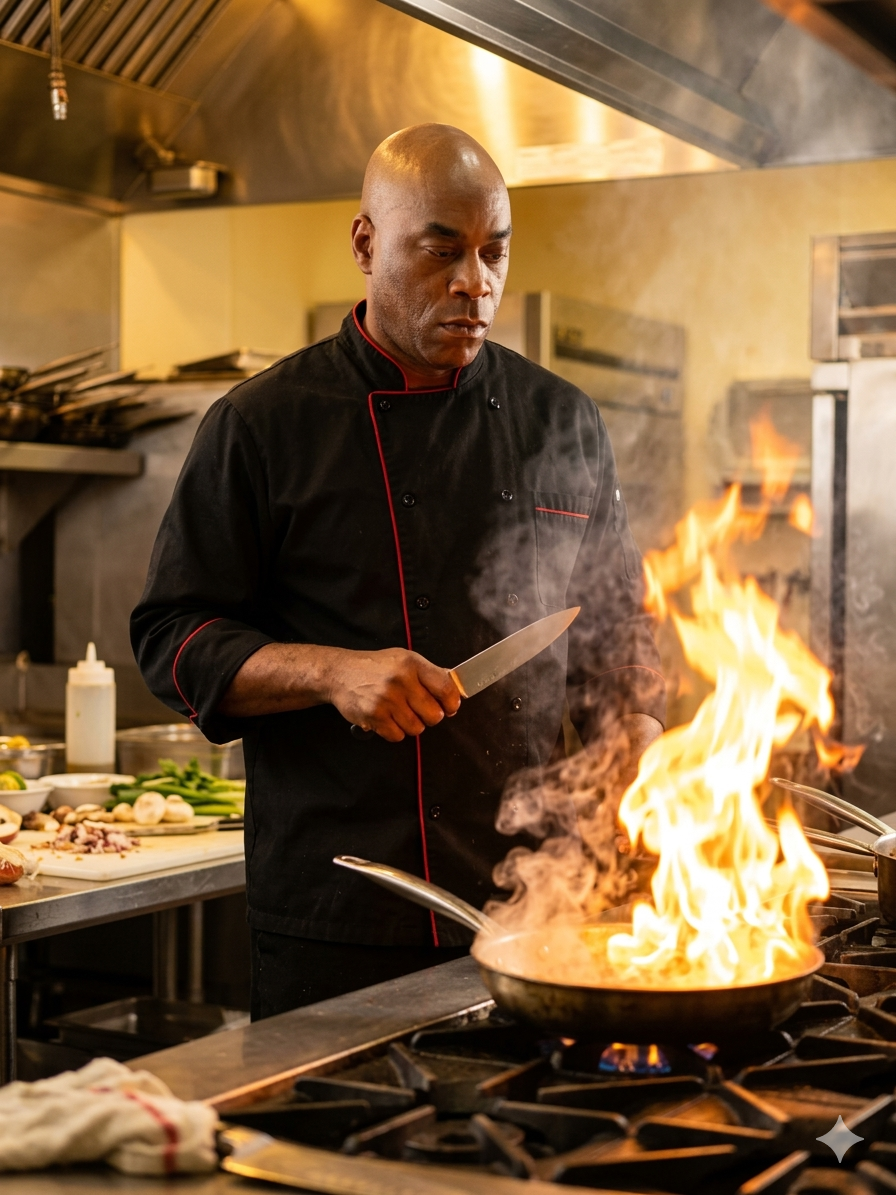
Kitchen control systems: the frameworks that make great kitchens run consistently.
The Core Lesson
The professional grill cleaning method is an 8-step process that should be performed at the end of every service. Each step has a specific purpose — skipping any step compromises the result.
**Step 1: Heat the grill.** Before cleaning, turn the grill to high heat for 10-15 minutes. This burns off food residue and makes carbon deposits easier to remove. A cold grill is much harder to clean — the residue is sticky and adheres to the grates. Heat loosens everything.
**Step 2: Apply grill cleaner.** With the grill still hot (but not at maximum temperature — reduce to medium), apply a commercial grill cleaner or degreaser to the grates. Follow the manufacturer's instructions for dwell time — typically 2-5 minutes. The cleaner breaks down grease and carbon deposits chemically, making mechanical removal easier.
**Step 3: Spread the cleaner.** Using a grill brush or scraper, spread the cleaner across the entire grill surface, working it into the grates and around the bars. Ensure complete coverage — missed areas will not be cleaned.
**Step 4: Scrub the grates.** Using a heavy-duty grill brush, scrub the grates vigorously in the direction of the bars. Apply firm pressure and work systematically from one end to the other. For heavy carbon buildup, use a grill stone or pumice block after the brush. The goal is to remove all visible carbon deposits and food residue.
**Step 5: Rinse thoroughly.** Using a spray bottle of clean water or a damp cloth, rinse the grill surface to remove all cleaner residue. This step is critical — residual cleaner on the grill will transfer to food and create off-flavors or health risks. Rinse until the water runs clear.
**Step 6: Clean the grease trap.** Remove the grease trap or drip pan beneath the grill and empty it completely. Wash with hot soapy water, rinse, and sanitize. A full grease trap is a fire hazard — grease fires start in drip pans, not on grates.
**Step 7: Wipe down with a clean towel.** Using a clean, dry towel, wipe down the entire grill surface to remove any remaining moisture or residue. This also gives you a final visual inspection — any remaining carbon deposits or missed areas will be visible.
**Step 8: Season the grill.** Apply a thin coat of high-smoke-point oil (vegetable, canola, or grapeseed) to the clean grates using a folded towel or oil-soaked cloth. This prevents rust, conditions the metal, and creates the non-stick surface that makes the grill perform correctly. Turn the grill to high for 5 minutes to set the oil, then turn off.

Systems replace reliance on individual talent. Great kitchens run on systems.
Example Scenario
A cook cleans the grill by scrubbing it with a brush for 3 minutes and calling it done. The next morning, the opening cook finds: carbon buildup on the grates that wasn't removed, a full grease trap that wasn't emptied, and no oil seasoning on the grates. The first steaks of the day stick to the grates and come off with carbon residue on them. The chef sends them back. The opening cook spends 20 minutes re-cleaning the grill before service can begin. The previous cook's 3-minute 'clean' cost the kitchen 20 minutes and two wasted steaks.
Rookie Mistakes
- Cleaning a cold grill instead of heating it first
- Not allowing the cleaner to dwell before scrubbing
- Not rinsing the cleaner off completely
- Forgetting to clean and empty the grease trap
- Not seasoning the grill after cleaning
The Professional Standard
A professional grill clean follows all 8 steps, in order, every time. The grill is heated before cleaning, cleaner is applied and allowed to dwell, grates are scrubbed thoroughly, cleaner is rinsed completely, the grease trap is emptied and cleaned, the surface is wiped dry, and the grill is seasoned with oil. The entire process takes 20-25 minutes.
Chef Wisdom
"The grill is the most important piece of equipment on the line. How you treat it tells me everything about how you treat your station. A cook who cleans the grill correctly — every step, every time — is a cook who understands that their job extends beyond cooking. Equipment maintenance is part of the job. It always has been."
— 25 Years in Professional Kitchens
Workbook Reflection
Write your answers below. These are saved automatically in your browser.
Extended Study
Commercial grill maintenance is both a food safety requirement and an equipment longevity practice. From a food safety standpoint, carbon buildup on grill grates can harbor bacteria in the porous surface of the carbon, and residual cleaning chemicals can transfer to food if not rinsed completely. From an equipment standpoint, commercial grills that are cleaned and seasoned correctly last 15-20 years; grills that are poorly maintained typically require replacement in 5-8 years. The cost difference is significant: a commercial grill costs $2,000-$8,000 to replace. The 8-step cleaning method described in this lesson is consistent with the cleaning procedures recommended by major commercial grill manufacturers including Vulcan, Garland, and American Range.
Kitchen Simulation
It is 11:00 PM after a Saturday dinner service. The grill has been running for 8 hours. There is heavy carbon buildup on the grates, the grease trap is nearly full, and the surface is coated in grease and food residue. You have 30 minutes before you need to leave. Walk through the complete 8-step cleaning process: what you do at each step, how long each step takes, and what the grill looks like when you are done.
Mastery Questions
Can you answer these without looking back? These are the questions your certification exam will draw from.
- 1What are the 8 steps of professional grill cleaning, in order?
- 2Why must the grill be heated before cleaning begins?
- 3What is the risk of not rinsing cleaner off the grill completely?
- 4Why is cleaning the grease trap a fire safety requirement, not just a cleanliness issue?
- 5What is the purpose of seasoning the grill after cleaning and what oil should be used?
Take It to the Kitchen
Clean your grill using the complete 8-step method for 10 consecutive services. After each clean, photograph the grill and rate the result on a scale of 1-10. Track whether your technique improves over the 10 services. On the 10th service, compare your first and last photographs and write a reflection on what improved.
Study the cleaning and maintenance procedures for your specific grill model from the manufacturer's manualResearch the chemistry of commercial grill cleaners and degreasers — what they break down and why dwell time mattersPractice the 8-step method until you can complete it in under 25 minutes without skipping any steps