Reading and Managing Kitchen Culture
Lesson Objective
Develop the ability to read kitchen culture accurately — understanding what it is, how it forms, and how it can be influenced — so you can operate effectively within it and contribute to improving it.
Why It Matters
Kitchen culture is the invisible force that determines how people behave when no one is watching, what gets tolerated, what gets celebrated, and what gets punished.
Culture is more powerful than rules. Rules tell people what to do. Culture tells people what is actually acceptable.
A cook who cannot read culture is constantly surprised by the room. A cook who can read culture can navigate it, protect themselves within it, and eventually influence it.
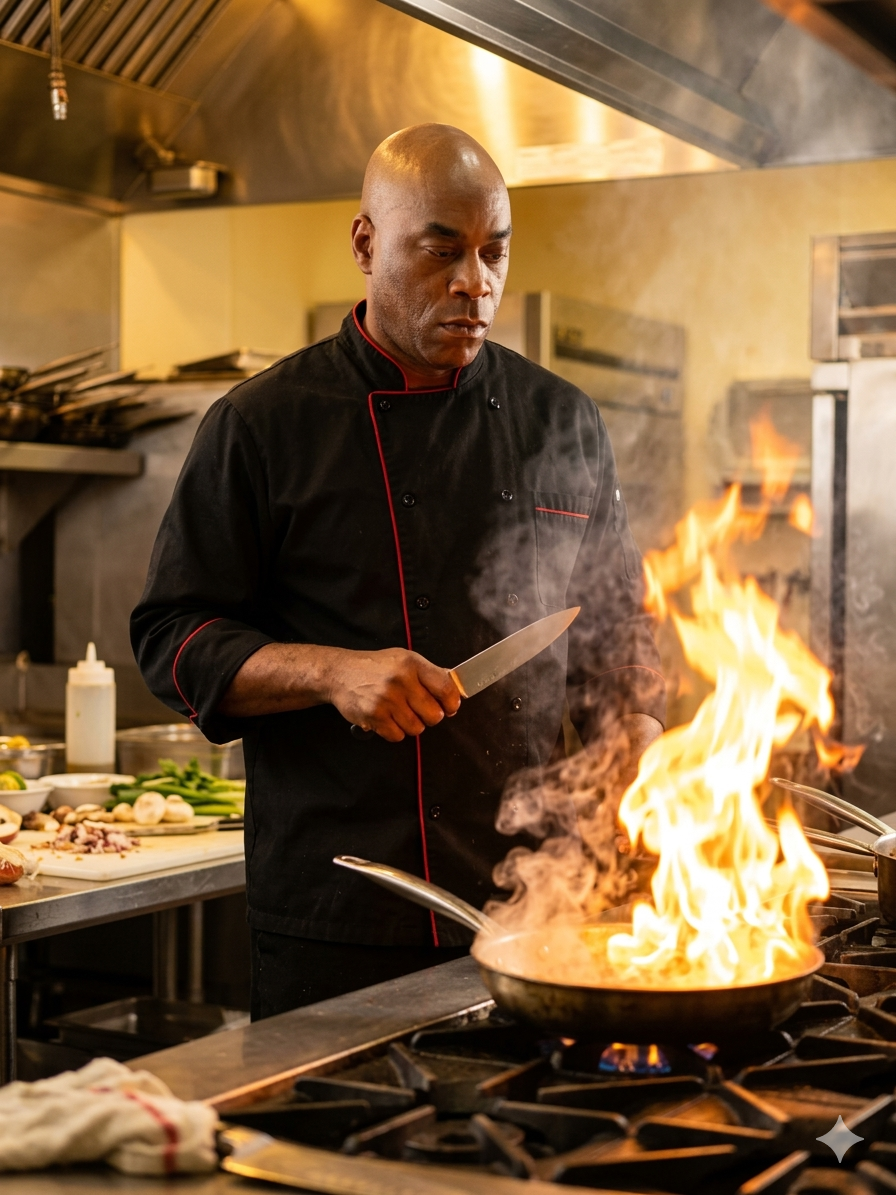
The chef mindset: ownership, accountability, and constant improvement.
The Core Lesson
Kitchen culture is formed by the accumulated behavior of the people in the room, especially the most influential people. It is not formed by mission statements, posted values, or chef speeches. It is formed by what actually happens: what gets corrected and what gets ignored, what gets rewarded and what gets punished, how mistakes are handled, how new people are treated, and how pressure is managed. These patterns, repeated over time, become the culture.
Culture can be read through three lenses: what people say, what people do, and what people tolerate. What people say is the least reliable indicator — people often say what they think they should say. What people do is more reliable — behavior under pressure reveals actual values. What people tolerate is the most revealing — the things that are consistently allowed to happen define the real culture, regardless of what is officially stated.
Toxic kitchen cultures share common patterns: blame flows downward, credit flows upward, mistakes are punished rather than learned from, new people are hazed rather than developed, and emotional volatility is normalized. These patterns are not inevitable — they are choices, repeated over time, that have become habits. They can be changed, but only through consistent counter-behavior from influential people in the room.
A cook can influence culture without authority by consistently modeling the behaviors they want to see, refusing to participate in toxic patterns, treating new cooks with respect, and being honest about problems rather than complaining about them. Cultural influence is not about speeches or confrontations — it is about the consistent, visible behavior of people who are respected in the room.
The most important cultural contribution a cook can make is to be the kind of person who makes the kitchen better by being in it. This means being reliable, honest, skilled, low-drama, and genuinely invested in the team's success. One person who embodies these qualities consistently can shift the culture of a room over time — not through authority, but through gravity.
Leadership in the kitchen is earned, not assigned.
Example Scenario
A kitchen has a culture of blaming the newest cook whenever something goes wrong. It has been this way for years. A new senior cook joins the team. They never participate in the blame pattern — when something goes wrong, they ask 'what happened and how do we fix it?' instead of 'who messed up?'
Within three months, the blame pattern has reduced significantly. Not because anyone made a rule. Because one influential person consistently modeled a different behavior, and others followed.
Rookie Mistakes
- Reading culture through what people say instead of what they do and tolerate
- Participating in toxic patterns to fit in — this makes you part of the culture problem
- Thinking culture can be changed through speeches or confrontations — it changes through behavior
- Underestimating your own cultural influence — one person modeling good behavior consistently matters
- Not recognizing when a culture is genuinely toxic versus just demanding
The Professional Standard
Read culture through three lenses: what people say, what people do, what people tolerate
Culture is formed by what actually happens — not by what is officially stated
Influence culture through consistent, visible behavior — not through authority or speeches
Be the kind of person who makes the kitchen better by being in it
Refuse to participate in toxic patterns — this is a cultural contribution
Chef Wisdom
"Culture is not what is posted on the wall. It is what is tolerated on the floor. The cook who understands this can read any kitchen accurately — and eventually influence it."
— 25 Years in Professional Kitchens
Workbook Reflection
Write your answers below. These are saved automatically in your browser.
Extended Study
Edgar Schein's model of organizational culture identifies three levels: artifacts (visible behaviors and structures), espoused values (what people say they believe), and basic assumptions (unconscious beliefs that drive behavior). Schein argues that the deepest and most powerful level is basic assumptions — the things people believe so fundamentally that they don't even think to question them.
In kitchen terms, basic assumptions might include: 'mistakes should be punished' or 'new cooks must earn respect through suffering' or 'showing weakness is dangerous.' These assumptions are rarely stated explicitly, but they drive behavior throughout the kitchen. Changing culture requires surfacing and challenging these basic assumptions — which is why cultural change is so difficult and so slow.
Kitchen Simulation
Observe your kitchen for one full week through the three cultural lenses: what people say, what people do, and what people tolerate. Write your observations for each lens. Then identify: what is the actual culture of this kitchen (based on behavior and tolerance, not stated values)? What are the two most positive cultural elements? What are the two most toxic cultural patterns? What specific behavior could you model to counter one toxic pattern?
Mastery Quiz
Test yourself before revealing answers. These questions come directly from your certification exam.
Take It to the Kitchen
For your next week of shifts, practice one specific cultural contribution: choose one toxic pattern you have observed and consistently model the counter-behavior. Write what you observed, what you did, and what effect (if any) it had on the people around you.
YouTube: 'How Kitchen Culture Is Really Formed — And How to Change It' | Textbook Chapter: The Architecture of Kitchen Culture | Certification Module: Cultural Intelligence Assessment | Simulation: Cultural diagnosis exercise | Case Study: How one cook's consistent behavior shifted a toxic kitchen culture